
Russian hawthorn
Crataegus ambigua
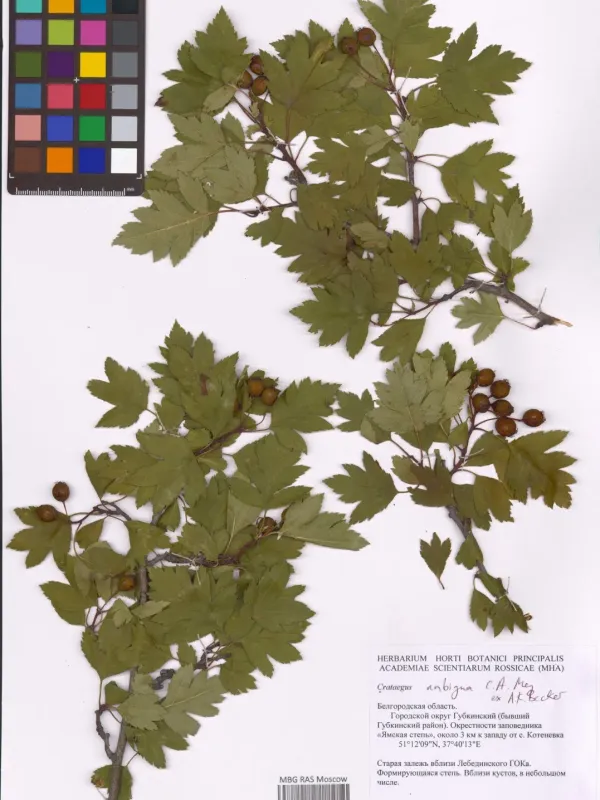
Description
Growing requirements
Russian hawthorn (Crataegus ambigua) is a resilient perennial shrub belonging to the Rosaceae family, known for its extreme tolerance to dry climates and poor soil conditions.
The plant originates from the regions of Crimea, the Caucasus, and parts of Western Asia. It typically thrives in open, sun-exposed rocky slopes and mountain forest edges where the soil is well-drained.
In terms of climatic requirements, this species demonstrates high frost resistance and an ability to survive prolonged drought, making it an excellent candidate for regions with scarce water resources.
The ideal soil for cultivation includes well-drained loams with a neutral or slightly alkaline pH. While it is tolerant to low fertility, it responds positively to basic soil cultivation in the initial establishment phase.
Basic agronomy for this crop requires selecting sunny planting sites, as shade negatively impacts both the flowering process and the overall health of the shrub, which is prone to developing a dense canopy.
Yield
The fruits of Crataegus ambigua are edible, rounded or oval drupes that reach maturity in late summer or autumn, providing a valuable source of nutrients and bioactive compounds.
Yield capacity develops as the plant reaches maturity, with significant production typically beginning 5 to 7 years after the initial planting of the nursery stock.
The fruit is widely utilized in the food industry for manufacturing juices, jams, teas, and tinctures, as well as being a staple in traditional herbal medicine for cardiovascular support.
Beyond food production, the plant is highly valued for ornamental purposes. It is frequently employed in agricultural landscapes to create thick, thorny, and impenetrable living fences.
Harvesting is usually done by hand, and the fruits are noted for their robust shelf-life, which facilitates easier transport and storage for small-scale and industrial processing facilities.
Main diseases and pests
Like many species within the Rosaceae family, Russian hawthorn is susceptible to powdery mildew and various types of leaf rust, especially in humid or poorly ventilated areas.
Pest management focuses on controlling aphids and fruit-boring insects, which are the most common threats to the yield and the aesthetic quality of the foliage.
Proactive agricultural practices, including systematic pruning to improve light penetration and airflow, significantly reduce the incidence of fungal and pest-related infestations.
Chemical control should be limited to instances of severe infestation, with an emphasis on preventive measures such as clearing fallen leaves to remove potential sources of infection.
Maintaining strong tree vigor through proper site selection and adequate moisture management remains the most effective defense strategy for long-term health and consistent fruit production.