
Jade plant
Crassula ovata x Kalanchoe thyrsiflora
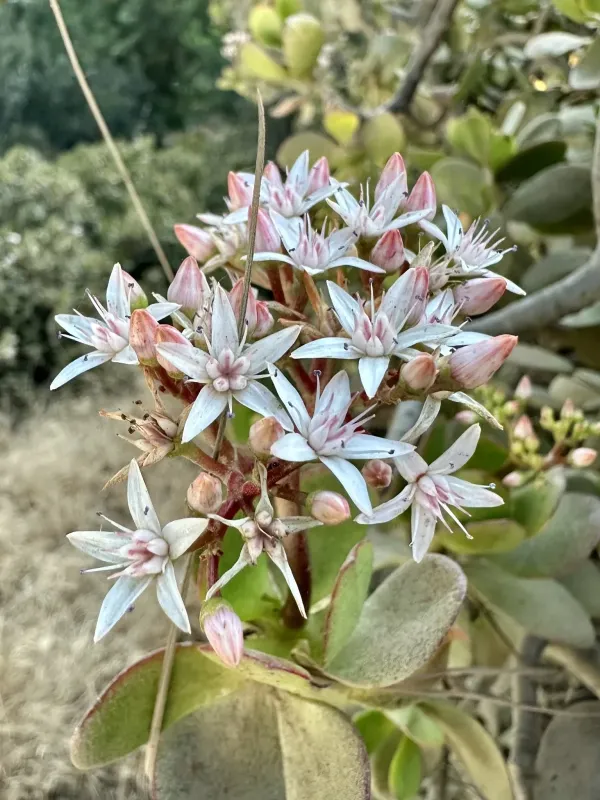
Description
Growing requirements
Jade plant (Crassula ovata) is a perennial succulent species belonging to the Crassulaceae family. Native to South Africa, it has evolved to thrive in arid environments with high solar radiation and periodic water scarcity, making it a highly resilient botanical specimen.
The plant features thick, fleshy, oval-shaped leaves designed for optimal water storage. Over time, the stems develop a woody, tree-like appearance, which is highly valued for its ornamental architectural structure in indoor cultivation and xeriscaping.
Successful cultivation requires well-draining soil media, such as a specialized cactus mix with perlite or pumice to prevent moisture accumulation. Drainage holes in the planting container are essential to ensure the longevity of the plant's root system.
The species thrives in bright, direct sunlight, which is necessary to maintain its compact growth habit and vibrant leaf coloration. Insufficient light levels often result in weak, leggy stems that require pruning to restore structural integrity.
Watering requirements follow a strictly seasonal pattern, allowing the soil to dry out completely between applications. During the winter dormancy period, the plant requires significantly lower water intake to avoid root rot and stimulate healthy spring development.
Main diseases and pests
Overwatering is the primary cause of decline for Crassula ovata, leading to root rot and fungal infections. Maintaining proper airflow and adhering to a "soak and dry" watering method effectively prevents most pathogen-related issues.
Mealybugs are the most common pest affecting this succulent, colonizing the leaf axils and stems. Prompt application of systemic insecticides or neem oil solutions is recommended for managing infestation before it spreads to adjacent specimens.
Scale insects can also infest the stems, extracting sap and causing localized necrosis on the plant tissue. Regular inspection and physical removal, followed by targeted insecticidal treatment, are standard protocols for pest management.
Spider mites may appear in environments with low humidity, causing leaf discoloration and webbing. Improving air circulation and maintaining recommended environmental standards are key strategies for avoiding mite outbreaks in a collection.
- Root rot (fungal pathogens)
- Mealybugs
- Scale insects
- Spider mites