
Costus arabicus
Costus arabicus
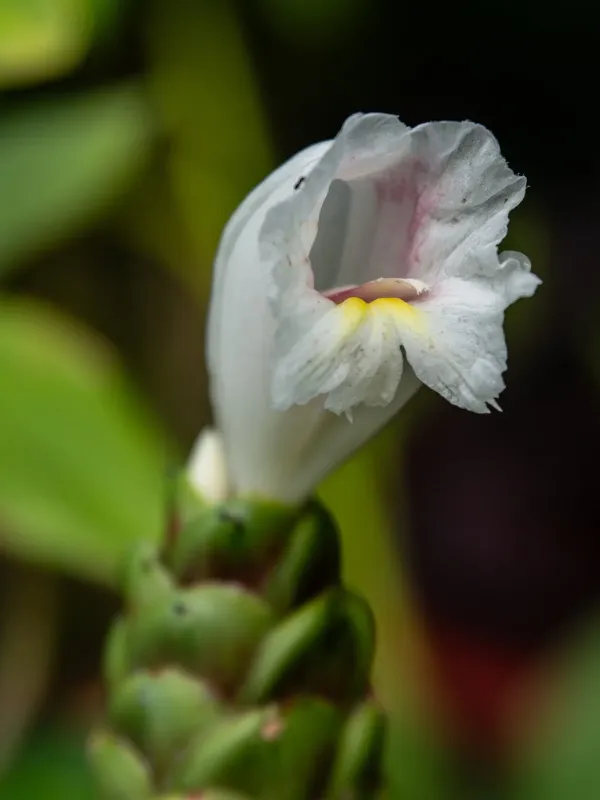
Description
Growing requirements
Costus arabicus, commonly known as spiral ginger, is a perennial herb belonging to the Costaceae family, originating from the tropical regions of Central and South America.
The crop is biologically adapted to humid, tropical environments, requiring consistent warmth and protection from cold winds or frost to maintain its metabolic activities.
Soil requirements for this plant include a high organic matter content, excellent drainage properties, and a slightly acidic to neutral pH level to ensure optimal nutrient absorption.
In terms of light, the crop thrives in bright, filtered sunlight, as intense direct exposure can cause significant dehydration and necrosis of the foliage in greenhouse conditions.
Irrigation management is critical: the substrate must remain consistently moist but never waterlogged, as poor drainage is the primary cause of root failure in commercial cultivation.
Main diseases and pests
The most common pests affecting Costus arabicus are spider mites and mealybugs, which exploit the plant's succulent tissues and thrive in the warm, humid climate required for growth.
Pathogenic threats include various root rots, typically triggered by prolonged exposure to stagnant water or pathogens present in poor-quality soil mixtures used during initial planting.
Leaf spot diseases, caused by fungi, can become a major concern if air circulation within the greenhouse or plantation area is insufficient to evaporate excess moisture from the leaves.
Effective pest management relies on early detection, maintaining strict hygiene protocols, and ensuring that environmental variables like humidity remain within the standard tolerance range.
Producers should prioritize integrated pest management (IPM) strategies, utilizing biological controls where possible to maintain the quality of the plant for its eventual end-use applications.