
Corispermum hyssopifolium
Corispermum hyssopifolium
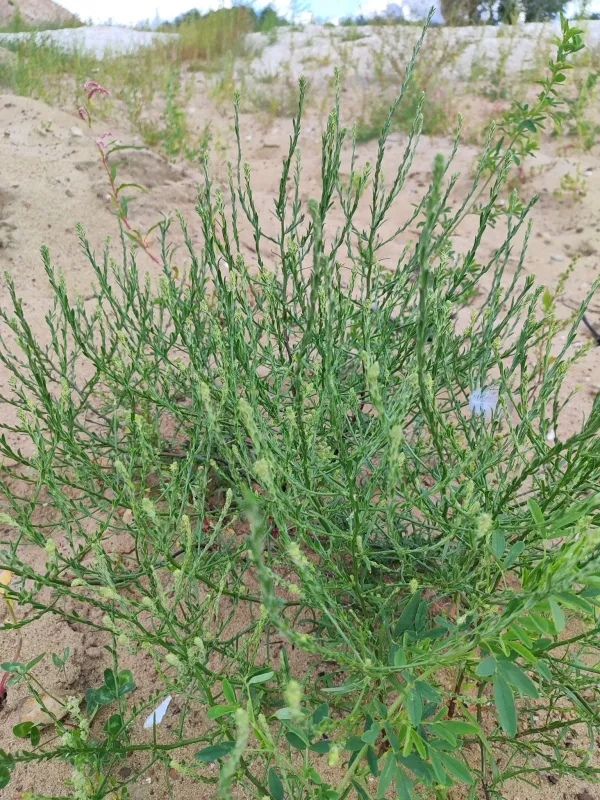
Description
Sowing dates
Corispermum hyssopifolium is a characteristic psammophyte, making the sowing timing dependent on the warming of sandy soils. The optimal time is early spring when deep soil layers still retain enough moisture for seed germination.
The plant exhibits high germination energy provided that temperatures remain stable above 10–12 degrees Celsius. It is crucial to sow before the onset of active hot winds, which can quickly desiccate the topsoil.
When using bugseed for sand stabilization, sowing is often combined with organic fertilizers or biological stimulants. Seed burial depth should not exceed 2–3 centimeters due to the small size of the achenes.
In natural conditions, the plant reproduces by self-seeding, a trait agronomists utilize for reseeding degraded pastures. Autumn sowing is also feasible, as seeds can undergo natural stratification during the winter.
Sowing density is adjusted based on specific goals: row planting is used for phytoremediation, while wider spacing is preferred to promote branching when forming a forage base.
Growing requirements
Belonging to the Amaranthaceae family, Corispermum hyssopifolium is an exceptionally hardy plant. It is perfectly adapted to sandy, loamy, and saline soils where conventional agricultural crops fail to survive.
The crop is distinguished by its outstanding drought resistance and salt tolerance, allowing it to thrive in extreme climatic zones. Its developed root system allows the plant to efficiently extract moisture from deep soil horizons.
Minimal nutrient requirements make it an indispensable choice for poor, degraded lands. However, it does not tolerate prolonged waterlogging or stagnant water, which can lead to root crown rot.
Optimal development occurs in well-lit areas, as the plant is light-loving and intolerant of shading from weeds during early growth phases. Climatically, it withstands both significant summer heat and harsh winter frosts.
Successful vegetation requires low competition from grassy weeds; therefore, controlling weed vegetation during the initial establishment stage is highly recommended.
Yield
The biomass yield of Corispermum hyssopifolium strongly depends on the substrate type and rainfall during the growing season. On fertile sandy soils, it can produce a substantial amount of biomass suitable for fodder.
In arid regions, average dry matter yield ranges from 0.5 to 1.5 tons per hectare. These figures can be significantly higher if even minimal additional irrigation is provided.
The plant's seed production is exceptionally high, allowing it to rapidly colonize empty spaces and regenerate naturally. This characteristic makes the crop cost-effective for long-term use without annual reseeding.
When used as fodder, the development phase must be considered: maximum nutritional value is achieved before the stems begin to lignify. Timely harvesting allows for the production of high-quality hay with acceptable protein content.
Yield potential can be improved with nitrogen fertilization, although the economic feasibility of such inputs on poor soils is often questionable.
Main diseases and pests
Corispermum hyssopifolium possesses high natural resistance to most typical agricultural pests. Due to the specific chemical composition of its sap and leaf structure, it is rarely damaged by insects.
Under high humidity conditions, the plant may suffer from powdery mildew, especially if stands are too dense. Prevention involves maintaining optimal sowing rates and ensuring good air circulation.
Root rot is rare and occurs exclusively in waterlogged areas with poor aeration. Soil drainage remains the most effective method for managing this pathology.
Pests such as weevils or locusts may cause minor damage during mass outbreaks. Typically, the plant recovers on its own after the insect activity cycle concludes.
Overall, the crop is considered phytosanitary-safe and does not require regular chemical pesticide treatments, facilitating the production of eco-friendly crops.
Harvesting
Harvesting for fodder purposes is conducted during the flowering phase or the onset of fruit ripening. This period represents the ideal balance between biomass volume and nutritional quality for ruminant animals.
Standard mowers are used for haymaking, as the plant features an upright stem suitable for mechanical processing. The cut biomass dries quickly, simplifying the hay preservation process.
If the cultivation goal is seed collection, harvesting is done once the fruits darken to prevent shattering. Specialized combines with modified headers are utilized to collect the small seeds.
Monitoring moisture during seed storage is critical; due to the high lipid content in the embryo, seeds require well-ventilated storage conditions. Improper storage can lead to rapid loss of viability.
Post-harvest residues are often left on the field to prevent soil erosion, as they serve as a mulching layer that protects the sands from wind erosion.