
Cordia sulcata
Cordia sulcata
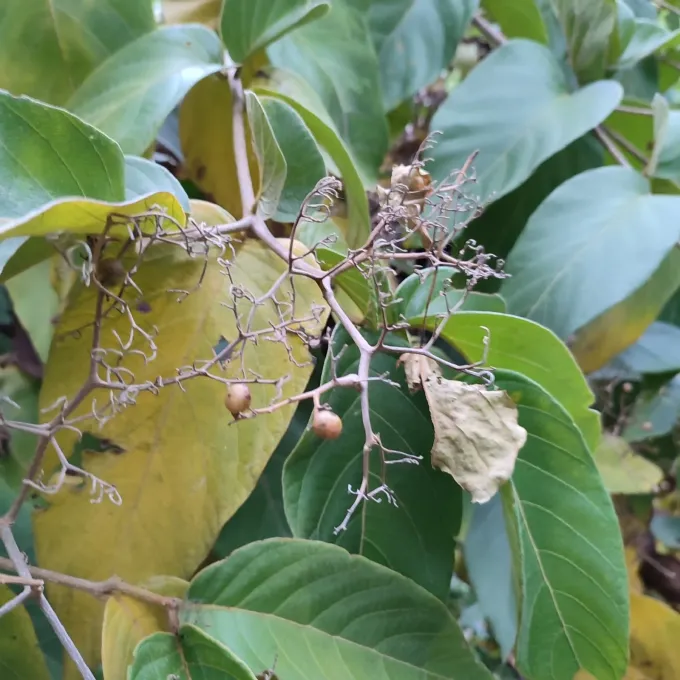
Description
Sowing dates
Cordia sulcata, commonly known as the white manjack or "cordia", belongs to the Boraginaceae family and is native to the tropical regions of the Caribbean.
The propagation of this crop is primarily done through seeds, which must be cleaned and stratified to ensure optimal germination rates in nursery conditions.
Sowing typically takes place at the start of the rainy season, as the high environmental moisture is essential for the development of healthy seedlings.
In a controlled nursery environment, seeds are planted in a well-aerated medium, ensuring that they are protected from excessive direct light during the early stages.
It is vital to maintain consistent moisture levels during the germination phase, as any stress during this period can lead to stunted growth in future trees.
Growing requirements
Cordia sulcata thrives in tropical climates where temperatures remain consistently high throughout the year and are never prone to frost.
The species is highly versatile regarding soil types, performing well in limestone, clay, and even somewhat rocky substrates provided they have adequate drainage.
While the tree can tolerate partial shade, optimal growth and development are achieved in full sunlight with sufficient rainfall throughout the growing season.
Soil pH levels should ideally range from neutral to slightly acidic, which is characteristic of the tropical forest environments where this tree originates.
The plant demonstrates a notable level of adaptability to various environmental stressors, making it a reliable choice for tropical agroforestry systems.
Yield
The economic value of Cordia sulcata is mainly linked to its timber, which is appreciated for its durability and resistance to many forms of degradation.
Beyond wood production, the tree serves a critical role in ecological restoration, providing food and shelter for a variety of local bird species.
In rural economies, parts of the tree, including the bark and foliage, are occasionally used for traditional purposes, adding to the plant's overall utility.
The integration of Cordia sulcata into farm landscapes helps improve soil quality through natural litter fall and root system stabilization.
Harvesting efficiency is improved when trees are planted in systematic patterns, allowing for better access for maintenance and eventual logging operations.
Main diseases and pests
The primary biological threats to Cordia sulcata include various fungal pathogens that flourish in high-humidity environments and can compromise tree health.
Insect pests, particularly those that feed on young leaves, can significantly reduce the photosynthetic capacity of the plants during their juvenile growth stage.
Root rot caused by poor soil drainage remains a major concern, necessitating careful site selection to avoid areas prone to waterlogging.
Invasive vines and weeds can compete with young trees for nutrients, requiring vigilant weeding efforts during the first three years after planting.
Monitoring for wood-boring insects is essential for plantation health, as these pests can cause significant damage to the trunks of mature trees.
Harvesting
The harvesting of timber involves selective logging, where only mature trees of specific diameter are removed to allow for natural forest regeneration.
Fruits are harvested by hand upon reaching full maturity, often identifying the right stage by their distinct change in color and soft texture.
Careful handling post-harvest is crucial to prevent mechanical damage, especially if the produce is intended for propagation or immediate market use.
After logging, the site must be managed to facilitate coppicing, as the tree exhibits a strong ability to produce new shoots from the remaining stumps.
Sustainable harvesting practices ensure that the population of Cordia sulcata remains productive while preserving the integrity of the local ecosystem.