
Coptis quinquefolia
Coptis quinquefolia
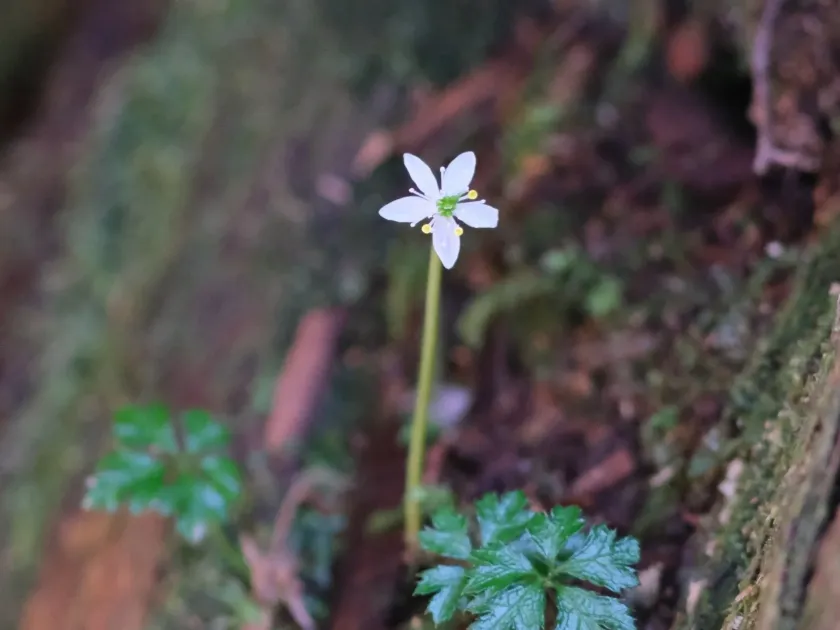
Description
Growing requirements
Coptis quinquefolia, commonly known as a type of goldthread, is a perennial plant belonging to the Ranunculaceae family. It is native to shaded woodland areas, primarily found in Japan, where it thrives in moist, organic-rich environments.
The plant requires a specific microclimate that mimics deep forest conditions. It is essential to provide full to partial shade, as exposure to direct sunlight can severely damage the foliage and inhibit the development of the rhizomes.
Soil requirements for this species are quite strict: the substrate must be well-draining but consistently moist, slightly acidic, and rich in humus. Incorporating leaf mold or well-decomposed organic matter is recommended for optimal plant vigor.
As a slow-growing species, Coptis quinquefolia requires stable conditions throughout the growing season. It is well-suited for cultivation in temperate climates, provided that temperature extremes are mitigated by shading and proper mulch layers.
Maintenance of the cultivation area focuses on water management and weed control. Mulching is highly effective for maintaining soil moisture levels and suppressing invasive plant species that could crowd out the slow-growing goldthread.
Main diseases and pests
The most common threat to this crop is root rot, which typically develops in poorly drained soils or during periods of excessive moisture. Maintaining an airy and well-structured soil profile is the best preventative measure.
Fungal leaf spot diseases can occur if planting density is too high, leading to reduced air circulation. It is advised to follow precise planting spacing recommendations to minimize the risk of infection spread.
Slugs and snails are the primary pests that damage the plant's delicate leaves. Implementing physical barriers or organic pest control methods helps manage their populations without using harmful chemicals.
In some cases, soil-borne nematodes can impact the root system, causing plant decline. Crop rotation and maintaining soil health are effective strategies for long-term production sustainability.
Because the harvested parts are used for their medicinal properties, chemical pest control must be strictly avoided to ensure the purity and pharmaceutical quality of the end product.