
Compsopogon caeruleus
Compsopogon caeruleus
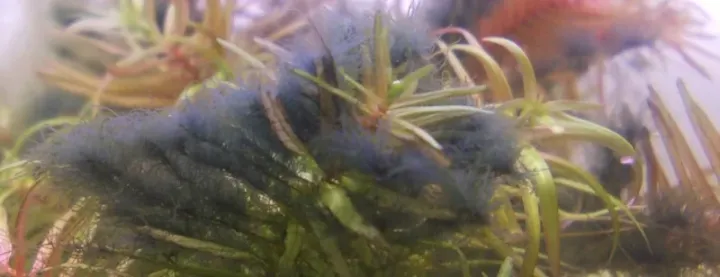
Description
Growing requirements
Compsopogon caeruleus is a prominent species of freshwater red algae belonging to the family Compsopogonaceae. Unlike the vast majority of Rhodophyta members, this species is well-adapted to freshwater environments, particularly in tropical and temperate regions.
Botanically, the plant forms distinctive filamentous thalli that can grow quite long. The coloration is characteristically blue-green or greyish, owing to the specific combination of pigments including phycoerythrin and chlorophyll, which allows for photosynthesis under variable light conditions.
The environmental requirements for this species are specific: it thrives in water with high mineral content and moderate current. A stable pH, typically ranging from 7.0 to 8.5, is essential for maintaining the integrity of its calcium-enriched cell walls.
Temperature plays a crucial role in its growth cycle, with optimal development occurring between 22 and 30 degrees Celsius. In such climates, it can quickly form dense mats on submerged structures, effectively competing with local flora for light and nutrient absorption.
Agrotechnical maintenance in controlled systems involves precise monitoring of water chemistry. Keeping nitrogen and phosphate levels within strict limits is the most effective way to prevent excessive biomass accumulation of this particular algae.
Main diseases and pests
The primary threats to the stability and health of Compsopogon caeruleus populations involve significant deviations in water quality. Sudden changes in salinity or drastic drops in dissolved mineral salts can lead to the structural degradation of the thallus.
Biological threats include pressure from specific grazers. While mature specimens are quite tough and resistant to herbivory, young filaments are often targeted by certain species of freshwater shrimp and snails, which can limit the spread of the colony.
Pathological issues often arise when water conditions become stagnant. Fungal and bacterial pathogens can colonize weakened sections of the plant, leading to necrosis of the filamentous structures, often observed as discolored or brittle patches.
Management of this species is complex due to its resistance to many standard aquatic herbicides. The thick, rigid cell wall makes it impervious to low-concentration treatments that would easily destroy other types of algae.
Effective control strategies focus on integrated management, including manual harvesting to remove biomass, shading to reduce photosynthetic energy, and competitive planting to limit the availability of dissolved nutrients in the water column.