
Coluria geoides
Coluria geoides
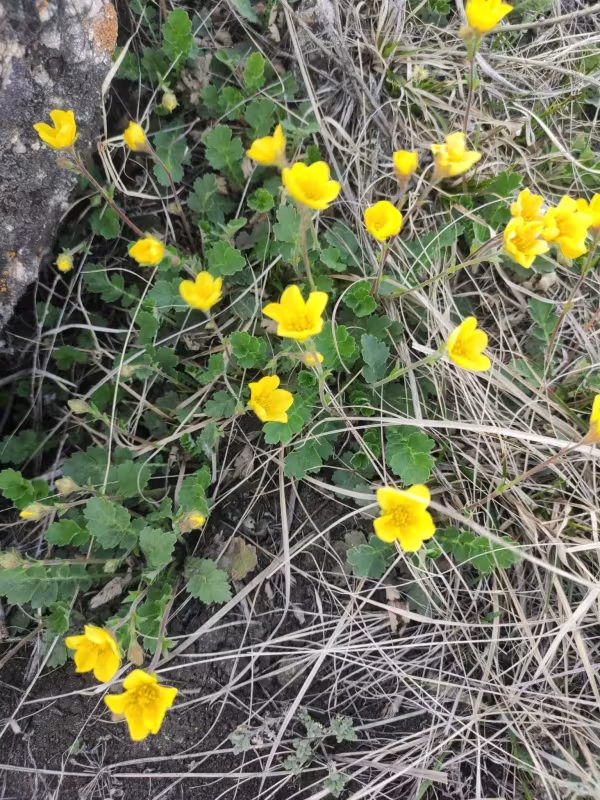
Description
Sowing dates
Coluria geoides is a perennial herbaceous plant belonging to the Rosaceae family. In agricultural settings, sowing is best performed in late autumn or early spring, provided that the seeds have undergone a mandatory stratification process to break their dormancy.
The seeds should be sown at a depth of no more than 0.5–1 cm. The seedbed must be well-prepared, friable, and free from competitive weeds, as the plant grows slowly during its first year of establishment and requires a clean environment to thrive.
When spring sowing is practiced, the use of growth stimulants can be highly beneficial to accelerate germination and increase the overall success rate of the stand. Proper soil moisture management during this critical phase is essential for optimal seedling emergence.
The recommended planting pattern involves maintaining row spacings of 45–60 cm. This spacing facilitates mechanical cultivation and weed control while ensuring that the plants have adequate space to develop a robust rosette of leaves during the vegetative phase.
Selection of the site is crucial, as the crop requires full sun exposure for optimal growth. Shaded conditions lead to etiolation and a significant reduction in the synthesis of volatile oils, which are the plant's primary economic product.
Growing requirements
The crop thrives in light, well-drained sandy loam or loamy soils with a neutral to slightly alkaline pH. It is particularly sensitive to waterlogging, which often leads to root rot; therefore, avoid low-lying areas or heavy clay soils prone to moisture retention.
Being native to mountainous steppes, Coluria geoides is exceptionally winter-hardy. It can withstand severe temperatures under a snow cover, though it remains vulnerable to late spring frosts that may damage the emerging flower stalks.
Water requirements are moderate. While consistent moisture is necessary for the plant's vegetative growth, irrigation should be carefully managed, especially as the plant nears maturity, to ensure high-quality root development and oil concentration.
Fertilization should prioritize phosphorus and potassium to support root system development. Nitrogen application should be kept at minimal levels, primarily during early spring, to prevent excessive leaf growth at the expense of root storage capacity.
Regular soil aeration through cultivation is essential. Hoeing between rows helps eliminate competing vegetation and improves gas exchange in the soil, which is a fundamental requirement for the healthy accumulation of bioactive compounds in the roots.
Yield
The primary economic output of Coluria geoides is its root, which is prized for its strong clove-like aroma derived from eugenol. Yields are heavily dependent on the age of the plantation, with peak root maturity typically occurring in the third year.
In commercial cultivation, proper management of the plantation allows for consistent yields of dried root material. High-quality production is judged by the concentration of essential oils and extractive substances found within the root structure.
While the foliage can be harvested as a secondary product, the root remains the focus of the cultivation cycle. The crop requires patience, as the root biomass must accumulate over several growing seasons to become economically viable.
Productivity is measured by the total output of dried raw material per hectare. Intensive agricultural methods, including proper weed management and nutrient regulation, significantly contribute to higher yields and superior product quality.
Harvest timing is critical; roots must be collected when the plant's metabolic activity begins to shift towards winter dormancy. This period ensures the maximum concentration of essential oils is locked within the root tissue for processing.
Main diseases and pests
Fungal diseases related to root rot are the primary threat, particularly in poorly drained soils. Overwatering or persistent high humidity in the root zone can lead to rapid decay of the rhizomes, causing significant losses in crop stands.
Pests typical of the Rosaceae family, such as aphids or leafrollers, may occasionally attack the aerial foliage. Early detection and the application of integrated pest management strategies are necessary to minimize potential damage to the plants.
Weed competition poses a severe challenge during the establishment phase. If left unchecked, fast-growing weeds can easily suppress Coluria geoides, leading to poor stand density and lower overall productivity of the field.
Soil-dwelling pests like wireworms can damage the root system, creating entry points for secondary bacterial infections. Implementing effective crop rotation and soil preparation techniques is the best defense against these underground threats.
Environmental stress, such as sudden temperature fluctuations during the early growth stages, can weaken the plant and make it more susceptible to opportunistic pathogens. A focus on optimal growing conditions is the best form of preventative care.
Harvesting
Harvesting is performed in the autumn of the third year, once the plant's aerial parts begin to senesce. At this stage, the energy reserves of the plant are concentrated in the roots, maximizing the quality of the raw material.
Roots are excavated, cleaned of soil, and washed with cool running water. It is vital to handle the harvested roots with care to prevent abrasions or damage to the outer layers, which contain the valuable essential oils.
Drying must be conducted in controlled environments with temperatures maintained between 40–45 degrees Celsius. Excessive heat must be avoided, as it causes the evaporation and loss of the delicate aromatic compounds that define the product's value.
Post-drying, the material undergoes sorting and quality control to remove any debris or substandard root fragments. A high-quality final product must possess a distinct and persistent clove-like scent with a clean, dry structure.
Proper storage is essential to maintain product integrity. The dried roots should be kept in airtight containers in a cool, dry, and dark environment to prevent degradation of the essential oils before the product reaches the end user.