
Confetti bush
Coleonema pulchrum Hook.
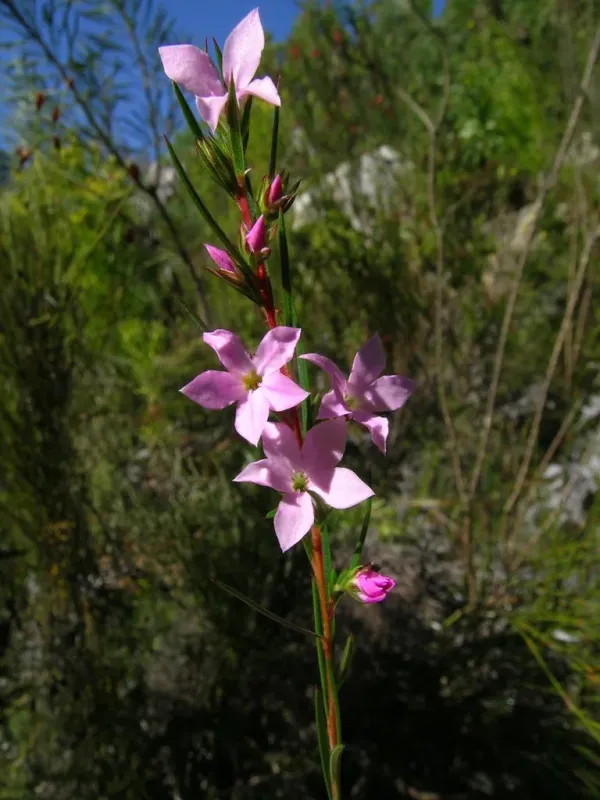
Description
Growing requirements
Confetti bush (Coleonema pulchrum) is an evergreen ornamental shrub belonging to the Rutaceae family. Native to South Africa, it is well-known for its fine, needle-like foliage and abundant pink flowers that cover the plant during the blooming season.
This species requires well-drained, slightly acidic soil to thrive. It is essential to ensure that the planting site has excellent drainage, as the roots are highly susceptible to rot if they remain in waterlogged conditions for extended periods.
Regarding climate, the plant prefers sunny locations with protection from harsh frost. While it can withstand mild dry spells once established, it performs best in regions where the climate resembles its natural Mediterranean-type habitat with moderate moisture levels.
Agrotechnical practices involve consistent, light pruning after the flowering period to maintain a bushy shape and encourage new growth. Supplemental fertilization with a low-phosphorus, balanced fertilizer is recommended during the active growing season to support health.
In terms of usage, the Confetti bush is widely used in landscaping for hedging, borders, and as an ornamental container plant. Its aromatic leaves, rich in essential oils, add a pleasant scent to garden spaces, making it a favorite for outdoor seating areas.
Main diseases and pests
The most significant threat to this crop is root rot caused by improper irrigation practices. Maintaining a strict watering schedule and ensuring porous soil is the best defense against soil-borne pathogens that target the root system.
Pest pressures primarily include aphids and scale insects, which tend to cluster on young shoots. Integrated pest management, including the use of horticultural oils or systemic insecticides, is effective in preventing these infestations from damaging the foliage.