
Coldenia procumbens
Coldenia procumbens L.
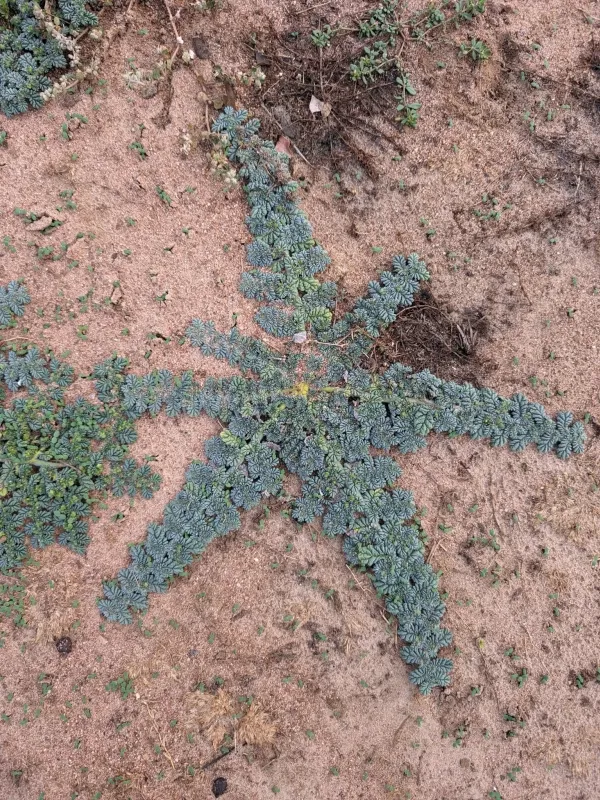
Description
Sowing dates
Coldenia procumbens is a thermophilic herb that thrives in warm climates, typically sown when the soil has reached an optimal temperature for germination, usually above 20°C.
In its native tropical habitat, seeding aligns with the onset of the rainy season to ensure sufficient moisture for seed establishment without the need for constant supplemental irrigation.
Seeds are placed at a shallow depth of approximately 0.5 to 1 cm. Uniform sowing is crucial, as deep burial can inhibit the emergence of small seeds or lead to poor stand density.
Field spacing should be maintained at 30-40 cm between rows to ensure that the prostrate habit of the plant does not lead to excessive overcrowding, which can hinder airflow.
Thinning is an essential practice shortly after emergence; spacing the seedlings correctly helps maximize the vegetative potential of individual plants while maintaining field sanitation.
Growing requirements
As a member of the Boraginaceae family, Coldenia procumbens requires full sunlight exposure to facilitate vigorous growth and the production of necessary biochemical metabolites.
The crop prefers well-draining, sandy or loamy soils. Excessive moisture retention in the root zone is a common cause of plant failure, making drainage management a priority in agricultural planning.
Soil pH should ideally be maintained in the neutral range of 6.0 to 7.5. Adjustments using lime or organic matter may be necessary if the soil profile is too acidic or alkaline for optimal nutrient uptake.
While the species is drought-tolerant, consistent soil moisture during the vegetative phase improves biomass yield significantly. Drip irrigation is highly recommended for efficient water use.
Minimal fertilization is generally sufficient, though the application of balanced organic compost at the time of field preparation can support early growth and root system development.
Yield
The yield of Coldenia procumbens is measured by the quantity of dried aerial biomass collected per hectare. With proper cultivation intensity, yields of 2 to 3 tons of dry matter are achievable.
Factors influencing yield include weed control efficiency, planting density, and the timing of harvest, which must coincide with the peak flowering period of the crop.
Regular maintenance, including shallow inter-row cultivation, helps aerate the soil and promotes the lateral branching of the creeping stems, thereby increasing the harvestable biomass.
Success in yield also depends on the post-harvest processing efficiency; rapid transport and controlled drying are vital to preventing biomass loss through degradation.
Sustainable agronomic practices that encourage healthy soil biology often result in consistent annual yields, provided that the crop is not stressed by extreme pests or pathogens.
Main diseases and pests
Aphid infestations are a primary concern, particularly during dry spells, as these insects can weaken the plant by feeding on phloem sap, leading to stunted foliage development.
Powdery mildew is a prevalent fungal threat in environments where humidity is high and airflow between plants is restricted. Visible white spores often appear on the foliage first.
Root rot, caused by various soil-borne pathogens like Pythium, occurs if fields become waterlogged. This leads to sudden wilting and permanent plant failure within localized patches.
Integrated pest management strategies should emphasize the use of biopesticides and maintaining proper field spacing to reduce the reliance on synthetic chemicals.
Crop rotation is recommended to prevent the buildup of soil-borne pathogens, ensuring that the field is not continuously planted with species susceptible to the same Boraginaceae diseases.
Harvesting
Harvesting is typically scheduled when the plants are in full bloom, ensuring that the concentration of therapeutic compounds in the aerial parts is at its maximum level.
The stems are cut manually at a height of approximately 2-3 cm above the soil surface. Care must be taken to minimize contact with soil particles during the cutting process.
Immediate post-harvest cooling is required to maintain the quality of the raw material. The crop should be spread out in shaded, well-ventilated areas to prevent fermentation.
Drying temperatures must be kept below 45°C to preserve the integrity of heat-sensitive active ingredients within the leaf tissue and stems.
Final storage requires moisture-proof and light-proof containers to ensure the shelf-life and potency of the dried product are maintained during transport and storage.