
Clematis rehderiana
Clematis rehderiana
Description
Sowing dates
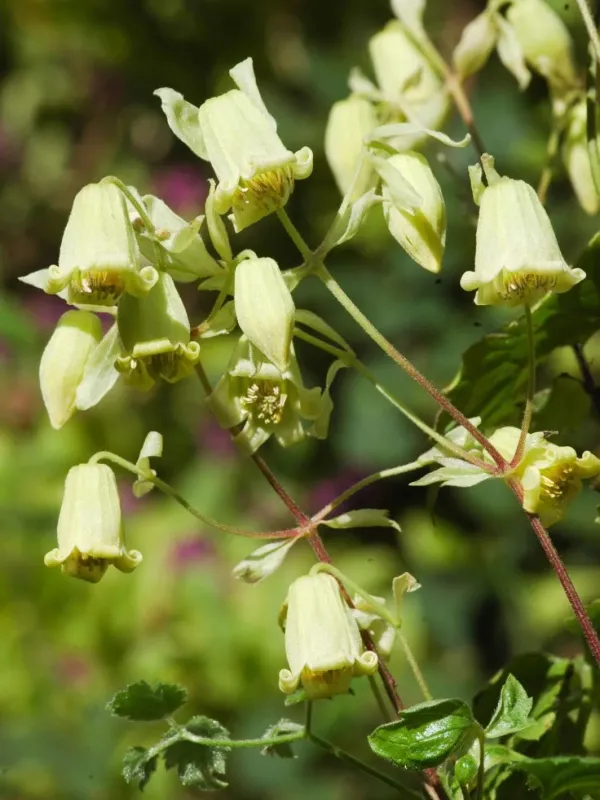
Clematis rehderiana is a perennial deciduous climbing vine belonging to the Ranunculaceae family. It is prized for its vigorous growth habit, often reaching several meters in height, and its delicate, bell-shaped, fragrant flowers that bloom in late summer.
Propagation is typically performed through cuttings or layering, as these methods ensure the consistency of the cultivar's traits. Seeds can also be used but require a period of stratification to break dormancy and may take longer to establish.
When planting, it is essential to choose a site with well-drained, fertile soil. The plant thrives in locations where its top growth can receive plenty of sunlight, while the roots are kept cool and shaded, perhaps by neighboring shrubs or mulch.
Spring is the ideal time for planting in the garden, once the danger of heavy frost has passed. Incorporating compost or well-rotted manure into the planting hole helps provide the necessary nutrients for the vine to establish a strong root system during its first year.
Proper spacing is crucial when planting multiple specimens. Allowing enough room between plants encourages better airflow, which is a key factor in reducing the risk of fungal diseases that are common in dense, poorly ventilated plantings.
Growing requirements
This species is moderately demanding regarding climate, preferring temperate regions with adequate moisture. While it can withstand cold spells, mulching the root zone in autumn is highly recommended to protect the crown from freezing temperatures during harsh winters.
Consistent watering is vital for the health of Clematis rehderiana, especially during dry spells. The soil should remain consistently moist but never waterlogged, as poor drainage is the primary cause of root rot in many clematis species.
Nutrient management involves applying a balanced fertilizer in early spring to encourage growth and a potassium-rich formula later in the season to support flower production. Avoid excessive nitrogen late in the season to ensure the wood hardens before winter.
Pruning is an essential part of the care routine for this climber. Since Clematis rehderiana blooms on the current year's growth, a hard pruning in early spring is beneficial to stimulate vigorous new shoots and keep the plant within manageable dimensions.
Providing sturdy support is necessary for the plant's vertical growth. As the vine uses its leaf petioles to climb, trellis systems or wire netting should be installed securely, ensuring they are tall enough to accommodate the plant's natural mature size.
Main diseases and pests
The most significant disease threat to Clematis rehderiana is wilt, caused by fungal pathogens that attack the vascular system. Infected stems should be pruned back to healthy tissue, and the plant should be monitored closely for further symptoms.
Powdery mildew can affect the foliage during humid, warm conditions. Maintaining good air circulation and using sulfur-based fungicides can help keep the foliage clean and prevent the spread of the disease to adjacent plants.
Pests such as aphids and spider mites may target new growth during the warmer months. These can typically be managed with periodic applications of insecticidal soaps or neem oil, which are effective while remaining relatively safe for beneficial garden insects.
Slugs and snails can cause significant damage to young leaves during the early spring growth period. Protective barriers or bait stations placed around the base of the plant are effective deterrents against these common garden pests.
To ensure long-term plant vigor, practice good sanitation by removing fallen leaves and debris around the base of the vine. This simple step helps reduce the overwintering potential for both pests and fungal spores, keeping the garden environment healthy.