
Clematis meyeniana
Clematis meyeniana
Description
Growing requirements
Clematis meyeniana is a perennial evergreen woody vine belonging to the Ranunculaceae family. Native to East and Southeast Asia, including China and Taiwan, this plant thrives in subtropical forest environments where high humidity and moderate temperatures prevail.
The plant requires a stable climate and performs best in sheltered locations that provide protection from harsh, drying winds. It excels in vertical gardening when trained along sturdy supports, utilizing its leaf petioles to climb.
Soil requirements are strict: the plant needs a well-draining, nutrient-rich soil mix with a slightly acidic to neutral pH. Proper soil structure is essential to allow for good aeration, preventing the root system from suffocating in heavy, waterlogged clay.
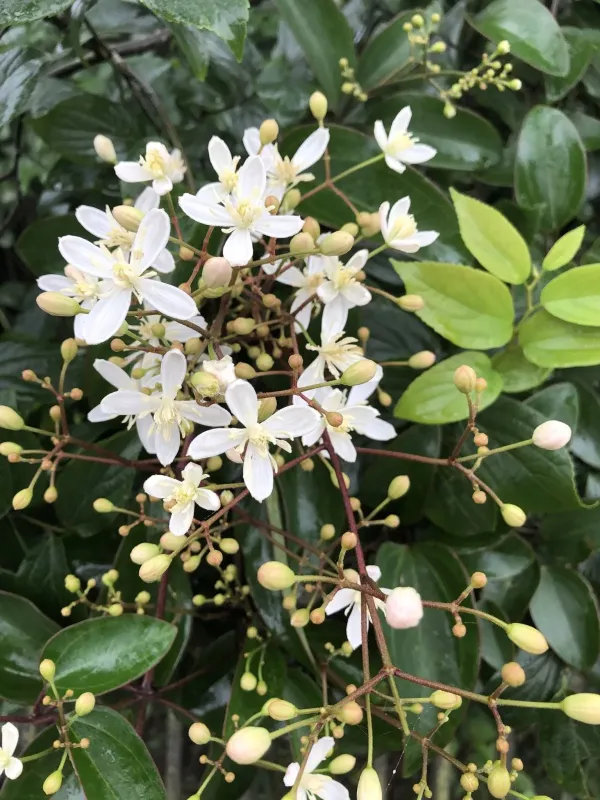
Botanically, it is recognized by its glossy, coriaceous foliage and abundant panicles of fragrant, white flowers. Its growth habit is vigorous, making it an excellent candidate for large-scale landscaping in warmer climate zones.
While primarily used as an ornamental species, its cultural significance in traditional settings highlights its adaptability to various garden structures. It requires consistent irrigation, especially during the active growth phase, without allowing for standing water.
Main diseases and pests
Clematis wilt, caused by various fungal pathogens, remains the most significant disease threat to Clematis meyeniana. Once the vascular tissue is colonized, the vine can collapse rapidly, requiring immediate removal of affected sections.
Aphids represent a recurring pest issue, particularly during the spring flush of new growth. They cluster on tender shoots, hindering development and potentially spreading viral infections throughout the plant.
Spider mites are prevalent in environments where ambient humidity is low. These pests feed on the underside of leaves, causing chlorosis and premature leaf drop if infestations are not addressed with regular misting or treatment.
Powdery mildew is a common fungal affliction that manifests during humid, stagnant conditions. It can be mitigated by ensuring proper plant spacing and airflow, which minimizes the buildup of spores around the foliage.
Root-knot nematodes can cause significant underground stress, manifesting as stunted top growth. Integrating beneficial microbes into the soil and maintaining soil health can help mitigate the impact of these microscopic pests.