
Clematis jouiniana
Clematis jouiniana
Description
Growing requirements
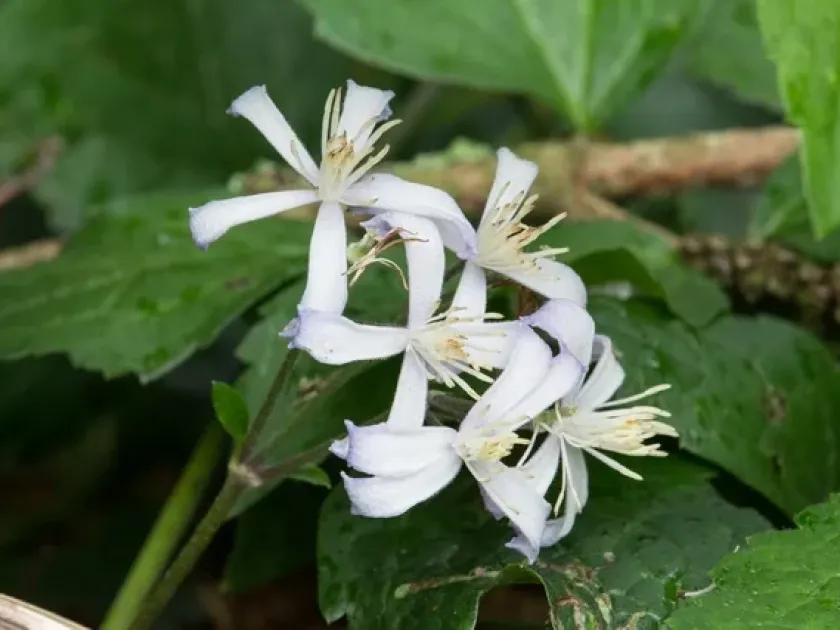
Clematis jouiniana is a notable interspecific hybrid within the Ranunculaceae family, derived from Clematis tubulosa and Clematis vitalba. It is widely recognized for its vigor and ability to grow as both a ground cover and a climbing vine.
Botanically, it forms a semi-shrub habit with woody bases that produce long, arching stems. The leaves are typically trifoliate, creating a dense canopy that provides a lush appearance during the entire growing season.
To ensure healthy growth, the plant requires well-drained, nutrient-rich soil with a neutral to slightly alkaline pH. Full sun to partial shade is ideal for promoting maximum bloom density in late summer.
Climatic requirements are moderate, as the species is hardy in various zones, but it benefits significantly from deep mulching in colder climates to protect the roots from sudden temperature fluctuations.
In terms of agricultural and horticultural use, Clematis jouiniana is prized for vertical landscaping. It is frequently utilized to cover fences, pergolas, and slopes where low-maintenance coverage is required.
Main diseases and pests
The primary threats to this species include fungal infections such as powdery mildew and wilt, which are often exacerbated by poor air circulation and high humidity levels.
Root rot is a critical risk factor, especially when the plant is situated in heavy or poorly drained clay soils where moisture remains trapped around the root collar for extended periods.
Pests that commonly impact this culture include aphids, which cluster on tender new shoots, and spider mites that thrive in hot, dry conditions, causing leaves to yellow and wilt.
Integrated pest management strategies should include monitoring for early symptoms of infestation and the use of organic or chemical pesticides as needed to preserve the plant's structural integrity.
Proper pruning practices, usually performed in late winter or early spring, are essential to remove dead or diseased biomass, thereby preventing the spread of pathogens throughout the planting area.