
Cleistopholis patens
Cleistopholis patens
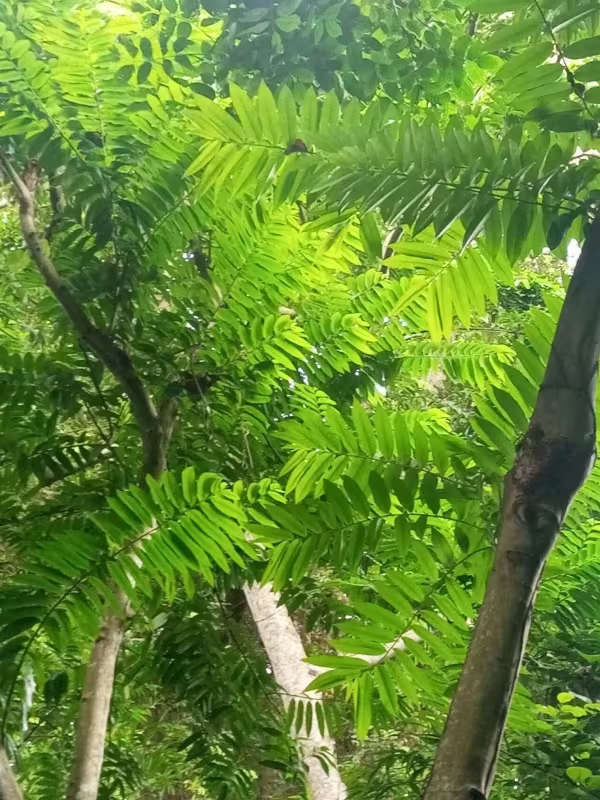
Description
Growing requirements
Cleistopholis patens is a fast-growing tropical tree belonging to the Annonaceae family, native to the rainforests of Western and Central Africa.
This species thrives in humid tropical climates, typically preferring fertile, well-drained soils found in secondary forests and forest edges.
The plant requires high temperatures throughout the year and consistent rainfall, as it is not well-adapted to prolonged periods of drought.
In terms of development, it acts as a pioneer species in forest regeneration, capable of rapidly colonizing disturbed sites in its native range.
Proper silvicultural management involves ensuring adequate space for the canopy to develop, which allows the tree to reach its full height of 25 meters.
Yield
The primary economic value of Cleistopholis patens lies in its lightweight and soft timber, which is highly sought after for various industrial applications.
It is commonly utilized for the production of plywood, matchsticks, and crates, owing to its ability to be easily processed and dried without warping.
Beyond industrial use, the plant holds significant importance in ethnomedicine, as extracts from the bark and leaves are used for various health conditions.
The fruits produced by the tree are a critical resource for local wildlife, supporting diverse avian and small mammal populations within the ecosystem.
Sustainable harvesting of this timber provides a valuable resource for local economies, supporting both small-scale carpentry and larger industrial manufacturing.
Main diseases and pests
Plantations of this species can be susceptible to fungal pathogens, particularly root rot, which is common in soils with poor drainage and stagnant moisture.
Various insect pests can impact the development of the tree by feeding on young leaves or boring into the stems, reducing the overall vitality of the crop.
Competition from aggressive weeds and climbing plants poses a significant challenge, especially during the early stages of tree establishment.
Climatic stress caused by unpredictable rainfall patterns can make the trees more susceptible to secondary infestations and overall stunted growth.
Integrated pest management strategies, including regular monitoring and maintaining optimal planting density, are essential for successful cultivation.