
Claytonia perfoliata
Claytonia perfoliata Donn ex Willd.
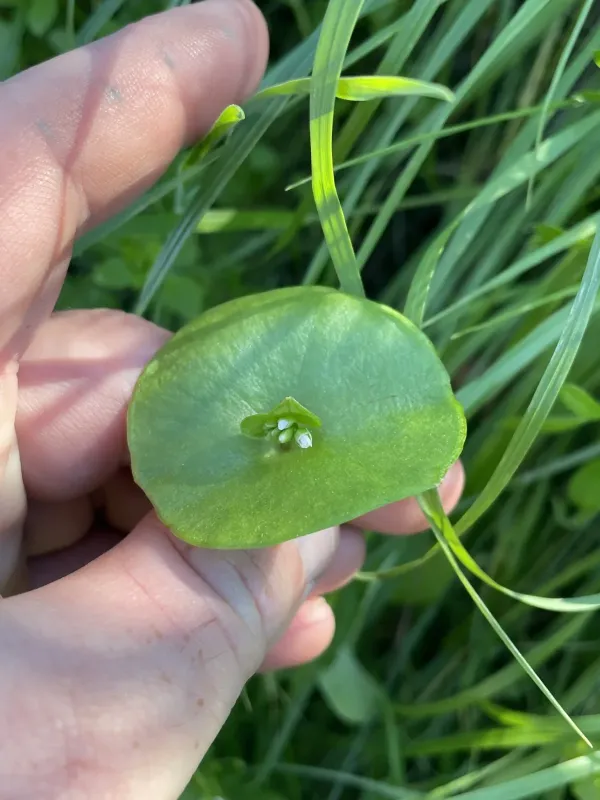
Description
Sowing dates
Claytonia perfoliata, commonly known as miner's lettuce or winter purslane, is a cold-hardy salad green that thrives in cool weather. Seeds are typically sown in early spring as soon as the soil is workable or in late autumn for an early harvest the following season.
For greenhouse production, miner's lettuce can be sown throughout the winter months, providing a continuous supply of fresh greens. The seeds should be sown at a shallow depth of 0.5 to 1 centimeter, as they require sufficient light exposure for optimal germination.
The recommended planting pattern involves rows spaced 15 to 20 centimeters apart. Proper spacing is essential to ensure adequate airflow around each plant, which significantly reduces the risk of fungal pathogens in dense vegetation.
Germination is most successful at temperatures between 12 and 18 degrees Celsius. Higher temperatures may result in sparse germination and slower development, making early spring or late autumn the preferred windows for establishing the crop.
Using floating row covers or low tunnels can help protect seedlings from harsh weather and speed up establishment. Once the plants reach the two-to-three true leaf stage, covers should be removed or ventilated to harden off the plants for ambient conditions.
Growing requirements
Belonging to the Montiaceae family, this plant is highly adapted to temperate, moist environments. It prefers loose, well-draining soils rich in organic matter, and it responds exceptionally well to the incorporation of mature compost before sowing.
Consistent soil moisture is critical for producing tender, succulent leaves. In dry conditions, the plant is prone to premature bolting, where it shifts its energy from leaf production to flower development, drastically reducing the quality of the harvest.
While the plant is shade-tolerant, it requires diffuse light to grow well. In direct, high-intensity sunlight, the leaves may become thick, leathery, and develop a bitter flavor, which is why shaded locations or greenhouse light-filtering are often employed.
Miner's lettuce exhibits excellent frost tolerance and can survive short-term freezing temperatures as low as -5 to -7 degrees Celsius. This unique trait makes it a valuable crop for winter production in unheated high tunnels or greenhouses.
Rotation is essential to maintain soil health. It is advisable to avoid planting miner's lettuce in areas previously occupied by other members of the Montiaceae or Portulacaceae families to prevent the accumulation of soil-borne diseases.
Yield
Crop yield is highly dependent on fertility and moisture management. In optimized conditions, one can expect to harvest between 1.5 and 2.5 kilograms of marketable leaves per square meter during a single growth cycle.
Initial harvests can typically begin 40 to 50 days after emergence. The plant possesses a robust ability to regenerate after being cut, allowing for two or three consecutive harvests if moisture is maintained and the crown is not damaged.
The peak quality is determined by the size of the leaf rosette and the absence of flower stalks. Once the plant initiates flowering, the harvest cycle must end as the leaves lose their texture and the culinary quality declines significantly.
For commercial-scale production, moderate nitrogen supplementation is beneficial. However, care must be taken to avoid excessive nitrogen, which can lead to nitrate accumulation in the leaves; therefore, organic-based fertilizers are generally preferred.
Increased density in vertical cultivation systems can significantly improve economic returns by maximizing space utilization and making the harvesting process more efficient and less labor-intensive.
Main diseases and pests
While generally hardy, Claytonia perfoliata is susceptible to fungal diseases such as powdery mildew and grey mold (Botrytis) if humidity levels remain too high and air circulation is insufficient. Good spacing remains the best primary defense.
Slugs and snails pose the greatest threat to young plantings, particularly in rainy conditions. Integrated pest management strategies, such as physical barriers or hand-picking during the twilight hours, are usually effective in protecting the crop.
Aphids can occasionally colonize the plants, targeting the tender new growth. When intervention is necessary, the use of insecticidal soaps or botanical extracts is recommended over harsh systemic chemicals to maintain the safety of the salad crop.
Root rots may occur if the soil remains waterlogged for extended periods due to poor drainage. Ensuring the planting bed is well-drained and the groundwater level is managed is fundamental to preventing these issues.
Maintaining clean tools and sanitizing trays between production cycles helps prevent the introduction of pathogens. Adopting strict cultural practices allows for sustainable production without relying on heavy synthetic fungicide applications.
Harvesting
Harvesting is performed by cutting the entire leaf rosette with a sharp knife just above the soil surface. Care must be taken not to damage the plant's growing point, which allows the plant to continue producing foliage for subsequent cuts.
The best time to harvest is in the early morning when the leaves are fully hydrated and turgid. This timing ensures that the greens remain fresh for as long as possible after they have been moved to storage or market.
After harvesting, the greens should be chilled immediately to slow down respiration. In a commercial environment, the product is often packed into perforated bags to balance humidity levels while preventing the buildup of excess moisture.
The shelf life of the harvested greens is approximately 5 to 7 days when kept in refrigerated storage at temperatures between 1 and 3 degrees Celsius. At room temperature, the leaves wilt rapidly, requiring a fast cold-chain distribution process.
Market presentation involves sorting leaves by size and removing any bruised or yellowed material. Appropriate packaging not only enhances aesthetics but also serves as a protective layer for the delicate leaves during transportation.