
Judean chickpea
Cicer judaicum
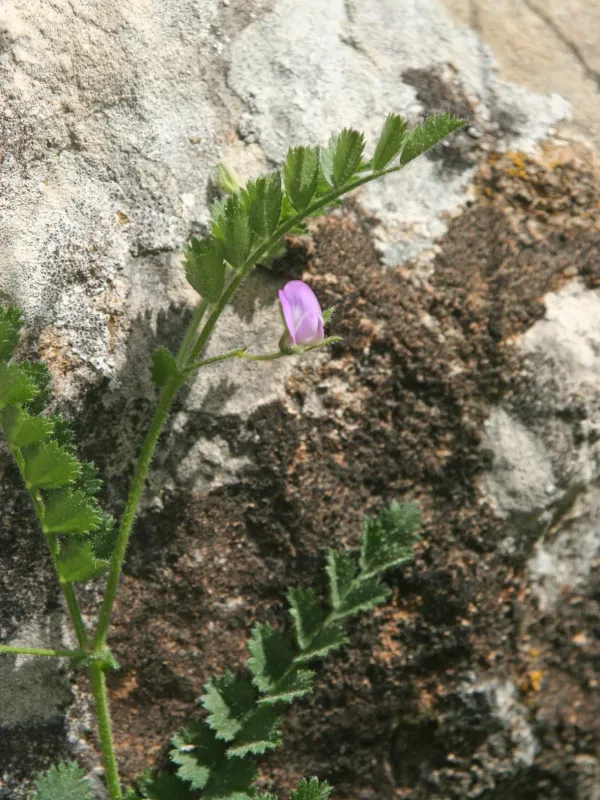
Description
Growing requirements
Judean chickpea (Cicer judaicum) is a wild legume species belonging to the Fabaceae family. It is recognized as a critical wild relative of the common chickpea, offering valuable genetic traits that are instrumental in modern plant breeding and agricultural research.
The native distribution of this species covers regions of the Middle East, primarily in Israel, Syria, and adjacent countries. It has naturally evolved in semi-arid environments, thriving in rocky limestone soils and areas characterized by hot, dry summers and cool winters.
Botanically, it is characterized by a strong taproot system that allows the plant to access moisture in deeper soil horizons. Its growth habit is prostrate to semi-erect, featuring small, pinnate leaves and specialized pods adapted to resist premature dehiscence in harsh conditions.
Regarding climate and soil, the plant requires well-drained, alkaline-rich substrates and full sunlight. It exhibits remarkable drought tolerance, which is a major focus for breeders looking to improve the resilience of standard chickpea crops in climate-change-affected regions.
In terms of usage, the Judean chickpea is primarily managed as a source of germplasm. Scientists utilize its natural resistance to environmental stressors to develop hybrid varieties that can withstand extreme weather fluctuations while maintaining high nutritional profiles.
Main diseases and pests
The most significant disease threatening Cicer judaicum is Ascochyta blight (Ascochyta rabiei), which can cause severe lesions on the stems and leaves if environmental moisture levels are consistently high.
Fusarium wilt is another primary risk, often associated with soil-borne pathogens that target the vascular system of the plant, especially in plots with poor drainage or stagnant water.
Insect pests, such as the chickpea pod borer (Helicoverpa armigera) and various species of leaf miners, pose a threat by feeding on the plant's vegetative tissue and developing reproductive structures.
Seed-feeding beetles, often referred to as bruchids, represent a challenge for seed production, as they can cause significant damage to stored genetic material or late-maturing pods in the field.
Effective management against these threats involves careful monitoring of the microclimate and the implementation of organic-compliant protective measures to maintain the health of the wild-type population.