
Blandfordia grandiflora
Blandfordia grandiflora R. Br.
Description
Growing requirements
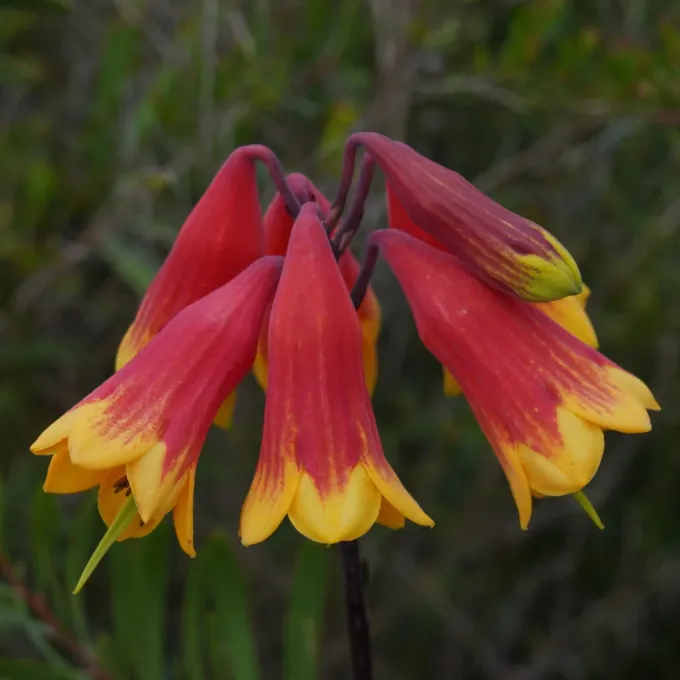
Blandfordia grandiflora, commonly known as the Christmas bell, is a perennial herb belonging to the family Blandfordiaceae. Native to the coastal regions of eastern Australia, this plant is naturally found in moist, sandy soils and is prized for its distinctive, bell-shaped, bright red flowers with yellow tips.
The botanical structure of this species includes a rosette of basal leaves and tall, sturdy flower spikes that can reach significant heights. These features make it highly adaptable as an ornamental plant for specialized horticultural collections and, in some cases, as an outdoor garden perennial in frost-free regions.
In terms of cultivation, the plant demands well-draining, acidic, and nutrient-poor soils that mimic its natural habitat. It thrives in locations with high ambient humidity and bright light, though it is sensitive to intense heat stress during the peak summer months.
Professional growers typically manage this plant in containers to precisely control moisture levels. Keeping the medium consistently moist but not saturated is essential for long-term survival, as the root system is particularly susceptible to rotting if left in stagnant water.
The primary horticultural application of Blandfordia grandiflora is the cut flower market, where its striking appearance and long vase life are highly valued. Its limited availability in commercial nurseries makes it a premium niche crop for specialist growers focusing on exotic botanical species.
Main diseases and pests
Root rot is the most significant pathological threat to this species, often caused by the genus Phytophthora due to improper drainage. Maintaining high hygiene standards and using sterile planting substrates are critical practices to ensure the health of the root system throughout the growing cycle.
Insect pests such as spider mites and aphids are frequently observed in greenhouse conditions. Growers often implement an integrated pest management (IPM) approach to keep populations in check, ensuring that the visual quality of the foliage and flowers is not compromised by feeding damage.