
Chirita tamiana
Chirita tamiana B. L. Burtt
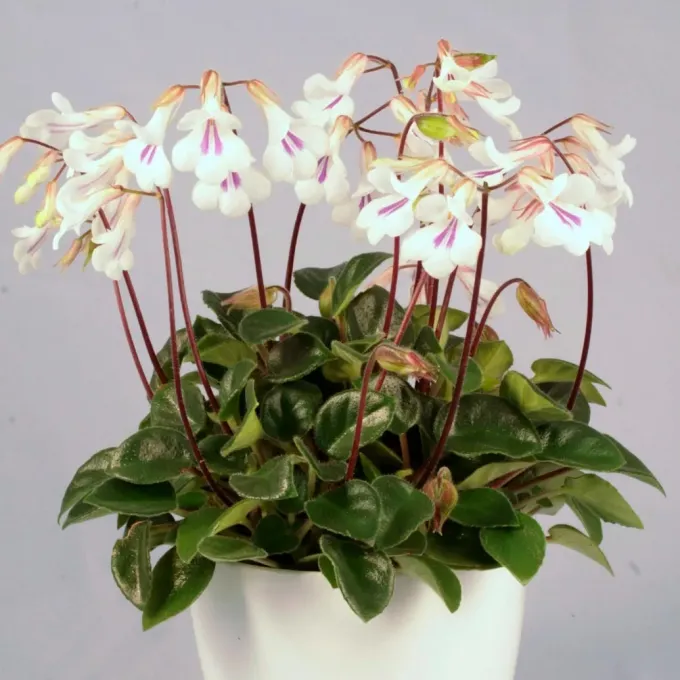
Description
Growing requirements
Chirita tamiana (scientifically accepted as Primulina tamiana) is a small, rhizomatous perennial belonging to the Gesneriaceae family. This species originates from the limestone cliffs of Vietnam, where it thrives in specialized microclimatic conditions.
The crop requires bright, indirect light to maintain its characteristic compact rosette shape. Direct sunlight is detrimental to the foliage, often causing leaf scorching and stunted development, whereas insufficient light leads to stem elongation.
Cultivation requires a highly porous and well-draining substrate. A mixture consisting of peat moss, perlite, and a small amount of charcoal is highly recommended to ensure proper aeration and to prevent the medium from becoming overly compacted over time.
Temperature management is crucial; the plant performs best in a stable environment ranging from 20°C to 25°C. Exposure to sudden temperature drops or persistent cold drafts significantly impairs the plant's metabolic processes and overall vitality.
The primary utility of the plant is ornamental. Due to its aesthetic appeal and miniature stature, it is widely favored by indoor gardeners and plant enthusiasts for display in terrariums, greenhouses, and on light-filtered windowsills.
Main diseases and pests
The most significant threat to this species is the incidence of crown and root rot, usually triggered by waterlogging and poor air circulation around the root zone. Proper drainage and careful watering practices are essential to prevent these fungal infections.
Pest management involves regular inspection for mealybugs and spider mites, which can thrive in indoor conditions with low humidity. Integrated pest control, including mechanical removal or application of horticultural soaps, is recommended at the first sign of infestation.