
Snowberry
Chiococca alba
Description
Growing requirements
Chiococca alba, commonly known as the milkberry or snowberry, is a perennial shrub or vine species within the Rubiaceae family. It is native to the tropical and subtropical regions of the Americas.
The plant thrives in well-drained, lime-rich, or sandy soils, demonstrating significant adaptation to the dry, rocky environments found in its natural habitat range.
Climate requirements for this species are strictly tropical or warm subtropical. It requires full to partial sun exposure and is highly intolerant of frost, necessitating protection in cooler zones.
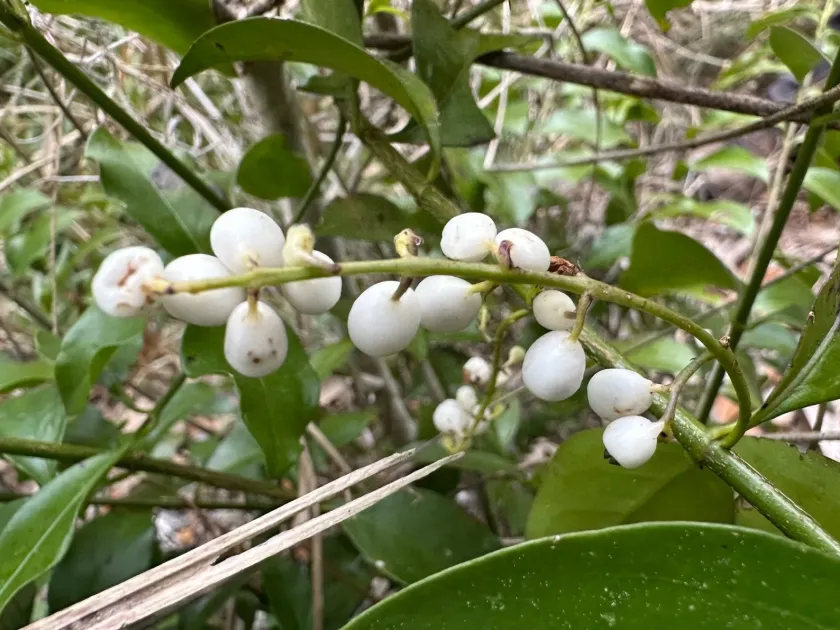
Botanically, it features leathery, opposite leaves and loose racemes of yellowish, bell-shaped flowers, followed by the iconic snow-white berries that give the plant its common name.
Economically, it serves as a landscape shrub in warmer climates and has a historical background in herbal medicine, where the roots were traditionally prepared as decoctions.
Main diseases and pests
The primary pests affecting Chiococca alba include scale insects and mealybugs, which tend to congregate in the axils of the leaves and on young stems, sap-sucking and reducing vigor.
Root rot, driven by Pythium or Phytophthora fungi, occurs primarily due to poor drainage or heavy, waterlogged substrates that prevent root respiration.
In humid environments, leaf spot diseases can manifest if foliage remains wet for extended periods, requiring a strategic approach to watering the soil directly at the base.
Integrated pest management protocols suggest maintaining high plant vigor through correct fertilization and avoiding chemical overuse that may disrupt local beneficial insect populations.
Sanitation remains the best defense; regular removal of deadwood and clearing debris from around the base of the plant significantly lowers the incidence of recurring fungal issues.