
Broad-leaved Ceratozamia
Ceratozamia latifolia
Description
Growing requirements
The Broad-leaved Ceratozamia (Ceratozamia latifolia) is a distinctive member of the Zamiaceae family. This cycad is native to the cloud forests of San Luis Potosi, Mexico, where it thrives in shaded, humid environments on rocky slopes.
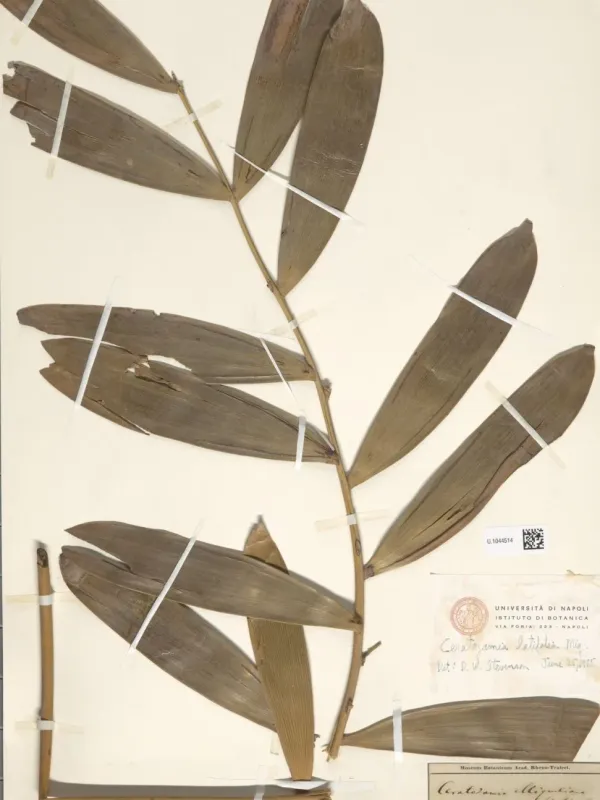
Botanically, it is defined by a subterranean or semi-subterranean caudex and dark, glossy, pinnate leaves. The leaflets are notably broader than those of other Ceratozamia species, lending the plant a lush, exotic appearance that is highly sought after by collectors.
Cultivation requires a highly porous and well-draining soil mix. A mixture of peat, perlite, and pine bark is often used to ensure that water does not accumulate around the crown, which is vital for preventing root death in this slow-growing plant.
Climate requirements include moderate, consistent temperatures. While it prefers warmth, it is sensitive to intense, direct sunlight, which can bleach the foliage. In cultivation, it performs best under 50-70% shade cloth or in bright, indirect indoor light.
Maintenance involves precise irrigation management. During the active growing season, the substrate should be kept consistently moist but never waterlogged. As the plant enters dormancy, water should be restricted to prevent root rot.
Main diseases and pests
Common pests affecting Ceratozamia latifolia include scale insects and mealybugs. These sap-sucking insects often hide near the base of the petioles or in the crevices of the caudex, making them difficult to detect until an infestation is severe.
Fungal pathogens, particularly those causing root and crown rot, represent the most significant threat to the health of the plant. These are usually introduced through contaminated soil or poor water management practices.
Pest control should be proactive, utilizing systemic insecticides or regular applications of neem oil. It is important to inspect the plant frequently, especially the undersides of the leaves, where pests typically establish colonies.
To mitigate the risk of fungal disease, avoid overwatering and ensure adequate air movement around the plant. Using a well-aerated potting medium is the primary line of defense against anaerobic soil conditions that favor pathogen growth.
In cases of severe infestation or rot, isolation is necessary to protect other specimens. Careful pruning of affected tissues followed by fungicide application can sometimes save the plant if the caudex remains firm and healthy.