
Ceratosanthes palmata
Ceratosanthes palmata
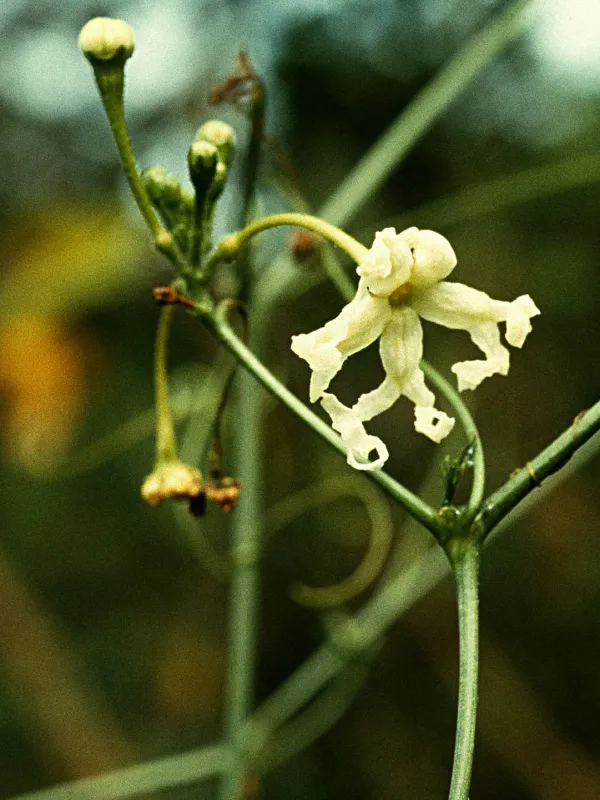
Description
Sowing dates
Ceratosanthes palmata is a perennial vine species within the Cucurbitaceae family. Successful cultivation requires a warm climate, mimicking its natural tropical habitat, where seeds are sown at the beginning of the rainy season to ensure moisture availability.
When starting from seed in a controlled environment, it is critical to use a high-quality, well-draining potting medium. The seeds should be planted at a depth of 2 to 3 centimeters, ensuring the soil remains consistently warm, ideally between 22 and 25 degrees Celsius.
Pre-soaking the seeds in warm water for several hours can significantly improve germination rates by softening the seed coat. This step is particularly beneficial for commercial propagation where uniform seedling emergence is desired.
Once seedlings have developed their first true leaves, they should be transplanted carefully to avoid disturbing the root ball. It is recommended to use biodegradable pots to minimize root stress during the transition to the field or greenhouse.
The spacing between plants should be sufficient to allow for significant canopy development. Given its vigorous climbing nature, providing a horizontal or vertical trellis system early in the growth cycle is highly recommended.
Growing requirements
This species thrives under full sun exposure, which is necessary for optimal photosynthesis and the production of healthy foliage. In areas with high intensity sunlight, some light shading during the peak afternoon hours might be beneficial to prevent heat stress.
The soil requirements focus on high organic content and excellent drainage. Ceratosanthes palmata is prone to root rot if placed in heavy, waterlogged soils, so soil amendments like perlite or well-rotted compost are encouraged.
Watering frequency should be adjusted based on the growth stage; maintaining moderate moisture levels is essential. During the flowering period, soil moisture stability is crucial to prevent premature flower drop.
The plant is highly sensitive to cold temperatures and frost. Even a mild frost can damage the succulent stems of the vine, so it should only be grown outdoors in zones where temperatures do not drop below 10-15 degrees Celsius.
Proper airflow is a non-negotiable requirement to keep the plant healthy. Positioning the vines on structures that lift them off the ground prevents excessive humidity build-up and reduces the risk of fungal outbreaks.
Main diseases and pests
Spider mites are the most common pest observed on this species, particularly in greenhouse settings with low ambient humidity. These pests feed on sap, leaving fine webbing and causing leaves to yellow and wilt.
Powdery mildew represents a major fungal threat characterized by white, dust-like spores appearing on the foliage. Improving circulation and ensuring that the leaves stay dry during evening hours are effective cultural controls.
Root rot, often caused by Pythium or Phytophthora species, occurs when soil is kept too wet for prolonged periods. This condition is difficult to treat once established, making prevention via proper drainage the primary defense.
Aphids can colonize the tender tips of the vines, potentially transmitting viral diseases. Early detection and the use of insecticidal soaps or biological control agents like ladybugs are effective management strategies.
- Monitor leaf undersides weekly for early signs of pests.
- Avoid overhead irrigation to minimize humidity on leaf surfaces.
- Remove any debris around the base of the plant to reduce pathogen refuges.