
Ceratodon purpureus
Ceratodon purpureus
Description
Growing requirements
Ceratodon purpureus is a cosmopolitan species of moss belonging to the family Ditrichaceae. As a pioneer species, it is capable of colonizing a vast array of substrates, ranging from sandy soils to highly disturbed man-made environments.
The plant exhibits remarkable ecological plasticity, allowing it to withstand extreme temperature fluctuations and prolonged periods of drought. In agricultural contexts, this moss is frequently observed on roadsides, abandoned fallow fields, and areas affected by surface fires.
The species thrives in open, sun-exposed habitats with a preference for moderately acidic soil conditions. It maintains a competitive advantage in nutrient-poor environments, particularly where nitrogen levels are insufficient for the establishment of vascular plants.
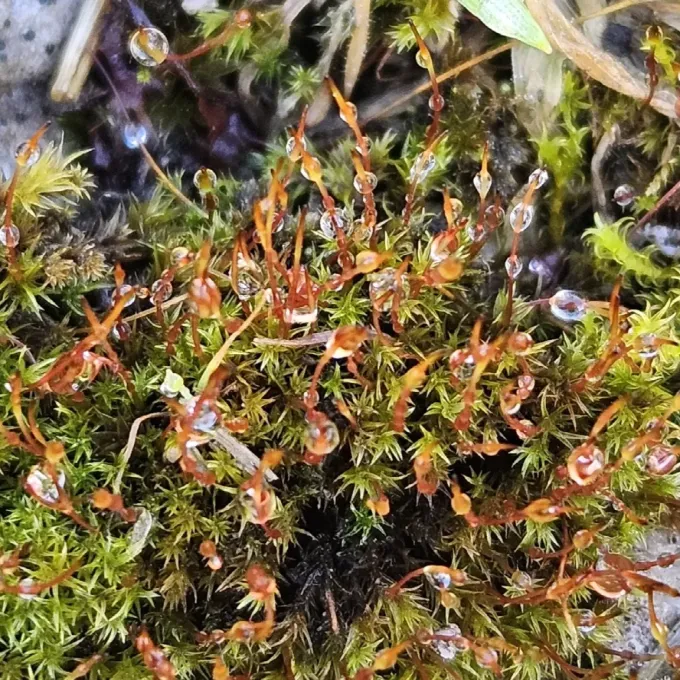
Botanically, the culture forms dense mats or cushions, often characterized by a distinct dark green or reddish-brown coloration. Its stems are erect, featuring lanceolate leaves with recurved margins, which serve as a primary diagnostic feature for field identification.
Reproduction occurs primarily through spores contained within capsules supported by long, distinctive purple setae. This mechanism facilitates the widespread dispersal of the moss via wind currents, accounting for its presence on every continent across the globe.