
Soleirol's Mouse-ear
Cerastium soleirolii
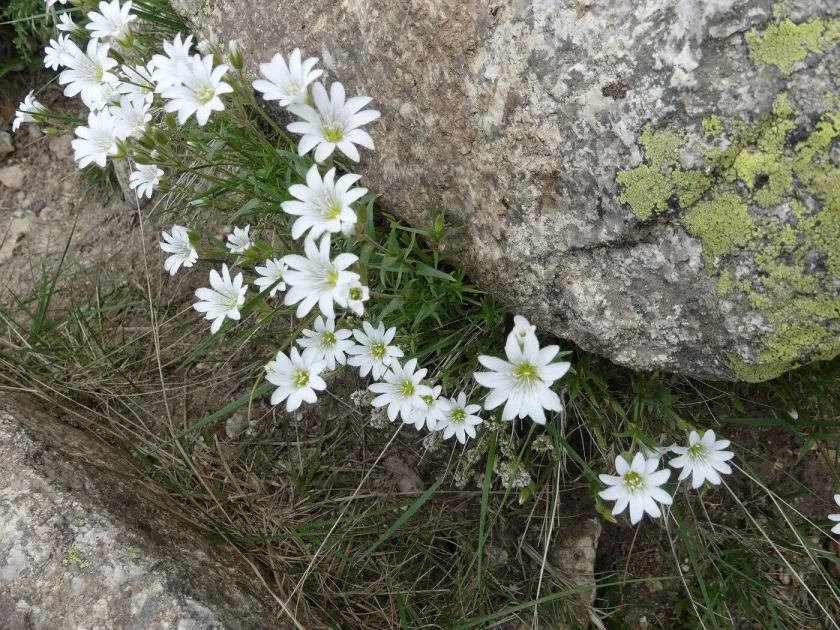
Description
Growing requirements
Soleirol's Mouse-ear (Cerastium soleirolii) is a perennial herbaceous plant belonging to the Caryophyllaceae family. It is native to the rocky landscapes of Corsica and Sardinia, where it thrives in alpine conditions.
This species is widely valued as a ground cover due to its prostrate growth habit and ability to form dense, mat-like structures that effectively suppress weed germination.
In terms of soil requirements, the plant prefers well-drained, gritty, or sandy soils. It is essential to ensure that the site provides excellent drainage to prevent crown rot.
The culture requires full sun exposure to maintain its compact morphology. If grown in semi-shaded areas, the stems tend to become elongated, losing their structural integrity and decorative appeal.
While adapted to harsh environments, in domestic cultivation, it benefits from moderate moisture during the initial establishment period and periodic fertilization with low-nitrogen mineral compounds.
Main diseases and pests
The primary threat to the stability of Cerastium soleirolii stands is fungal infection. These are often triggered by excessive soil moisture, leading to damping-off or root system decay.
Gastropod pests, including slugs and snails, are frequent visitors that graze on the foliage. Their feeding damage creates necrotic spots that can serve as entry points for bacterial infections.
Effective management includes maintaining low humidity around the base of the plant. This is often achieved by surrounding the plant with a fine gravel mulch, which acts as a physical barrier.
Poor circulation is another major risk factor for this species. Crowded plantings should be thinned out to allow the foliage to dry rapidly after rainfall or irrigation.
Early identification of pest infestation is crucial. Integrated pest management strategies should be prioritized over prophylactic chemical applications to maintain the plant's natural health.