
Perfoliate mouse-ear
Cerastium perfoliatum
Description
Growing requirements
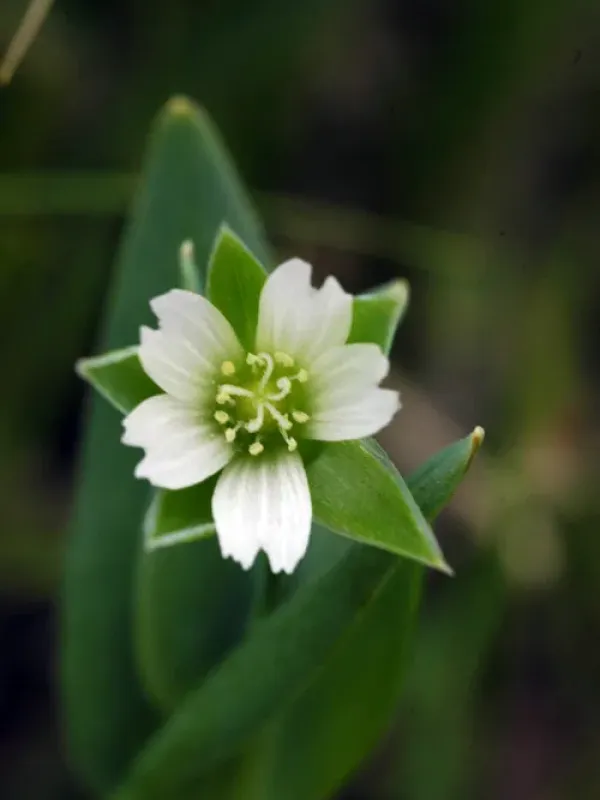
Perfoliate mouse-ear (Latin: Cerastium perfoliatum) is a herbaceous plant belonging to the Caryophyllaceae family, known for its distinctive fused leaves.
The plant originates from temperate regions of Eurasia, where it is typically found in open fields, meadows, and along the margins of agricultural land.
It thrives in well-drained, fertile soils with a neutral pH, demonstrating a high tolerance for varying climatic conditions, including early season drought.
Morphologically, Cerastium perfoliatum is characterized by its annual life cycle, erect stems, and white flowers arranged in characteristic inflorescences.
The species is highly adaptive, allowing it to colonize diverse landscapes, which often requires management strategies when found in close proximity to commercial crops.
Main diseases and pests
The species is susceptible to various fungal pathogens, most notably rusts and powdery mildew, which can significantly inhibit its growth under humid conditions.
Pest pressure often comes from leaf-mining insects and aphids, which can compromise the structural integrity of the plant and facilitate secondary viral infections.
Root system pests, such as soil-dwelling nematodes, can also impact the plant's nutrient uptake, especially in fields with poor organic matter content.
Effective management in an agricultural setting involves deep tillage and precise herbicide application during the seedling stage to minimize competition with crops.
Regular field monitoring is essential to detect early outbreaks of pests or diseases that could spread from wild populations to cultivated varieties of neighboring plants.