
Cerastium boissierianum
Cerastium boissierianum
Description
Growing requirements
Cerastium boissierianum is a perennial herbaceous plant belonging to the Caryophyllaceae family. It is a specialized species native to high-altitude mountain ecosystems, naturally adapted to environments where temperature fluctuations and harsh soil conditions are the norm.
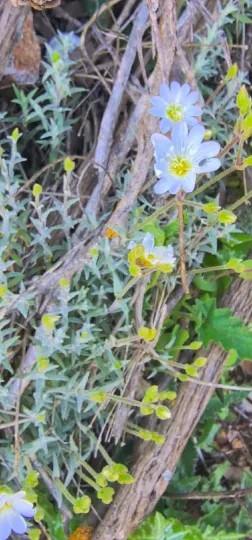
Botanically, the plant is distinguished by its cushion-forming growth habit, creating dense, spreading mats. Its foliage is typically small and often covered with fine hairs, an evolutionary trait that provides protection against intense solar radiation and excessive transpiration in mountain habitats.
The plant originates from the rocky slopes and scree fields of the Near East. Due to its evolutionary history, it is strictly adapted to well-drained, mineral-rich, and aerated soils, where it faces minimal competition from faster-growing species.
In terms of cultivation requirements, Cerastium boissierianum demands full sun exposure and a substrate that prevents any moisture accumulation near the roots. It thrives in gravelly or sandy, slightly alkaline soils that mimic the natural drainage of mountain cliffs.
The cultural value of this plant lies in its exceptional drought tolerance and resilience to low temperatures. It is primarily used in rock gardens, scree beds, and as an ornamental ground cover for exposed, sunny areas where soil fertility is limited and drainage is paramount.