
Cephaloziella divaricata
Cephaloziella divaricata
Description
Growing requirements
Cephaloziella divaricata is a species of liverwort belonging to the Cephaloziellaceae family. It is a non-agricultural bryophyte that serves as a vital component in pioneer vegetation, occupying niches where higher vascular plants struggle to establish due to nutrient scarcity.
The plant thrives in diverse habitats including acid heaths, sandy banks, and exposed mineral soils. It possesses a high tolerance for varying light conditions, though it performs best in open environments where competition from larger vegetation is minimal.
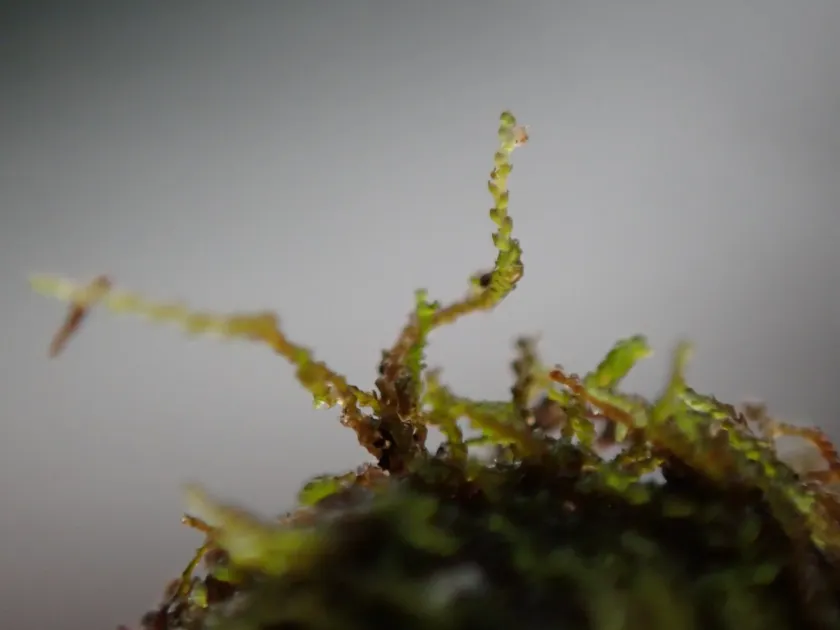
Botanically, it presents as tiny, thread-like stems that often form dense, dark green or reddish-brown mats. The leaves are distinctively bifid, deeply divided into two lobes, which is the primary trait for identification in field conditions under magnification.
Regarding its survival strategy, the species is classified as a stress-tolerant organism. It can withstand desiccation, temporarily suspending physiological activity until moisture levels allow for growth and sporophyte production, ensuring its survival across changing seasons.
In terms of practical utility, Cephaloziella divaricata is widely recognized as a bioindicator in environmental monitoring programs. Its presence or absence provides valuable data regarding soil pH levels and atmospheric stability, making it a subject of interest in ecological restoration projects.