
Silk floss tree
Ceiba speciosa
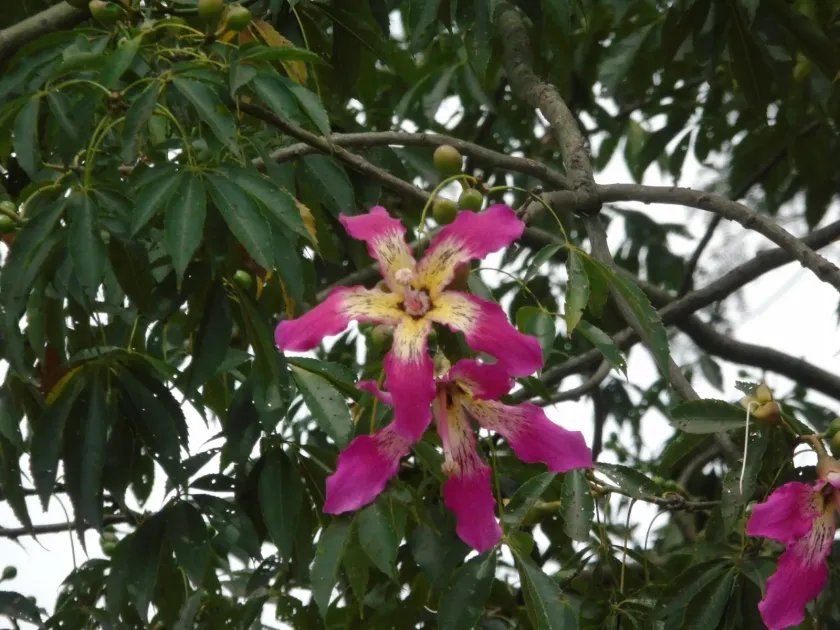
Description
Sowing dates
Propagation of the Silk floss tree is primarily achieved through seeds, which should be sown in a well-draining, nutrient-rich substrate immediately after harvesting to ensure high germination rates.
Seeds typically germinate within two to four weeks when maintained at a constant temperature between 22 and 25 degrees Celsius and provided with consistent moisture.
In nursery settings, seedlings are raised in containers to allow for root system development before being transplanted to their final location in the landscape.
Careful attention must be paid to light levels during the seedling stage, as young plants are prone to stretching if they do not receive adequate solar radiation.
In cooler regions, the plant must be cultivated in greenhouses or large pots that can be moved indoors, as the species is highly sensitive to frost.
Growing requirements
Belonging to the Malvaceae family, the Silk floss tree is a sun-loving species that requires full exposure to sunlight to thrive and produce its signature flowers.
The tree prefers deep, loose, and well-drained soils; it is vital to avoid waterlogged conditions to prevent the onset of root rot, which is common in stagnant soils.
Watering schedules should be adjusted according to the season: provide regular moisture during the growing season while allowing the soil to dry out during the dormant phase.
The plant performs best in temperatures ranging from 18 to 30 degrees Celsius, although it is hardy enough to withstand brief, light frost once established.
Regular fertilization with potassium-rich nutrients is recommended to support robust growth, branch density, and the production of large, vibrant flowers.
Yield
The primary yield from the Silk floss tree consists of its seed pods, which contain a soft, silk-like fiber that can be harvested for industrial use.
This fiber is traditionally used for stuffing pillows, mattresses, and insulation due to its lightweight and hydrophobic properties.
The seeds themselves are a source of oil, which is increasingly explored for industrial applications in the chemical and soap-making industries.
In the urban forestry sector, the Silk floss tree provides high value as an ornamental plant due to its unique, spiny trunk and stunning flower display.
While wood production is possible, the timber is generally considered too soft for heavy-duty structural use, making it better suited for smaller wooden artifacts.
Main diseases and pests
The most significant threats to the Silk floss tree include spider mites and mealybugs, especially in environments with low air humidity or poor ventilation.
Root rot remains the most serious disease, often resulting from overwatering or poorly structured soil that fails to facilitate drainage.
Leaf spot infections may occur during humid seasons; these are best managed by removing affected foliage and improving airflow within the canopy.
To maintain plant health, regular monitoring for signs of infestation and the timely application of systemic insecticides are standard agronomic practices.
- Inspect foliage weekly for signs of pests.
- Improve soil drainage if water runoff is slow.
- Apply balanced organic fertilizers to bolster resistance.