
Atlas cedar
Cedrus atlantica (Endl.) G. Manetti ex Carrière
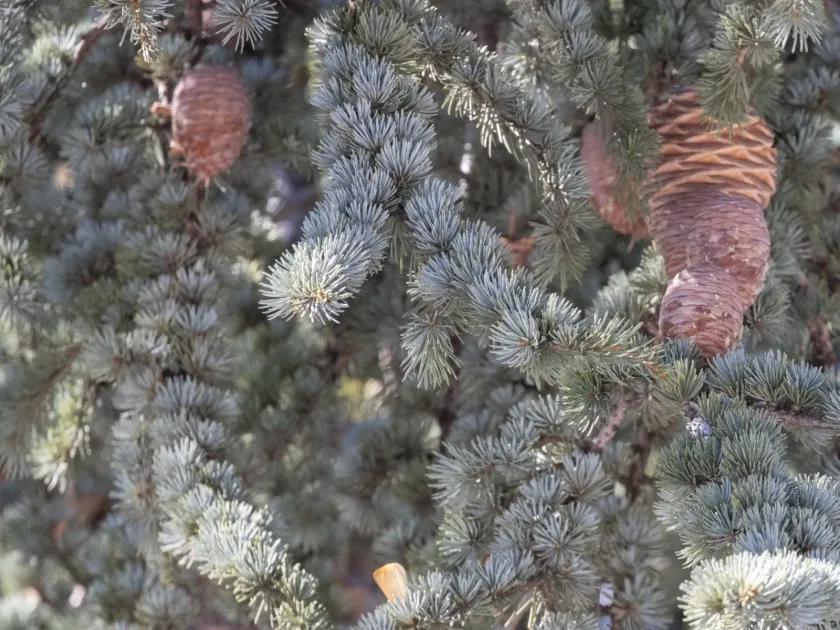
Description
Growing requirements
Atlas cedar (Cedrus atlantica) is an impressive coniferous evergreen belonging to the Pinaceae family. It is native to the Atlas Mountains of Morocco and Algeria, where it thrives in rugged mountain environments and high altitudes.
This tree is prized for its stately growth habit, featuring an upright conical crown that matures into a broad, horizontal-branched silhouette. Its needle-like foliage varies in color from deep green to silvery-blue, making it a standout ornamental species.
Climate requirements include full sunlight and a location protected from harsh winter winds. While native to mountain slopes, it has shown good adaptability to a wide range of temperate climates, provided that the growing site allows for deep root development.
Soil conditions are critical for the health of Cedrus atlantica. It prefers deep, fertile, well-drained soils with a slightly acidic to neutral pH. It absolutely cannot tolerate waterlogged soils, which often lead to irreversible root rot.
Agrotechnical maintenance focuses on providing adequate space for root expansion and ensuring water access during the initial establishment period. Once established, the tree is notably drought-tolerant and requires minimal human intervention, making it a sustainable choice for large landscapes.
Main diseases and pests
Fungal diseases, such as needle cast (Lophodermium) and tip blight, are common threats, especially in humid or poorly ventilated climates. Applying copper-based fungicides during the early spring can significantly mitigate these risks.
Pests such as aphids and cedar scale insects can infest branches and needles, extracting sap and weakening the tree. Integrated pest management using insecticidal soaps or systemic treatments is effective for localized outbreaks.
Root rot caused by Phytophthora species is a major hazard associated with poor drainage. Once established, this disease is difficult to treat, making preventative soil management and proper site selection the most vital tools for the grower.
Bark beetles can become a concern for trees already weakened by drought or mechanical damage. Maintaining tree vigor through proper fertilization and avoiding site compaction are the best defenses against opportunistic infestations.
Environmental factors, particularly salt accumulation in needles and excessive nitrogen runoff, can cause chlorosis or foliage decline. Monitoring soil nutrient levels and ensuring proper drainage will maintain the tree's natural luster and vigor.