
Caylusea hexagyna
Caylusea hexagyna
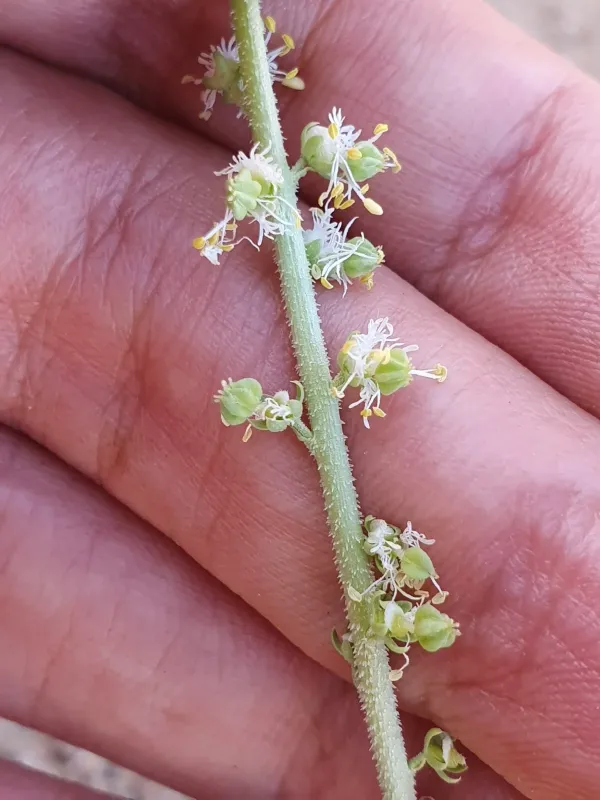
Description
Growing requirements
Caylusea hexagyna is a plant species within the Resedaceae family. It is primarily known for its remarkable adaptation to arid and semi-arid environments where water availability is extremely limited.
The plant exhibits typical xerophytic traits, including a deep and robust root system designed to extract moisture from sandy or stony soils. It thrives in regions characterized by high temperatures and sparse rainfall.
Soil requirements for this species focus primarily on texture and drainage. Loose, sandy substrates are preferred, as they prevent waterlogging, which is a major physiological stressor for this specific desert plant.
Regarding climate, Caylusea hexagyna is a sun-loving species. It requires intense solar radiation throughout its growing season to achieve full morphological development and successful seed production.
The plant structure features a straight stem and distinctive fruits, which are capsules formed by six locules. This specific botanical feature is the primary identifier for the species and separates it from other members of the Resedaceae family.
Main diseases and pests
In its native habitat, the primary threats to Caylusea hexagyna are environmental, such as severe droughts that exceed even the plant's high tolerance levels, and overgrazing by local fauna.
While adapted to harsh climates, the plant can fall victim to various sucking insects that exploit the plant's hydration reserves, especially during the early stages of its development.
Fungal diseases such as root rot can occur if the plant is introduced to environments with poor soil drainage or high humidity, leading to the rapid decay of the taproot system.
Weed competition is generally low in its native desert range, but in controlled agricultural settings, invasive species can quickly outcompete Caylusea for soil nutrients and light.
Management of these threats in a cultivated or conservation context requires strict monitoring of soil moisture levels and the implementation of protective measures against localized pest outbreaks.