
Castroviejoa frigida
Castroviejoa frigida
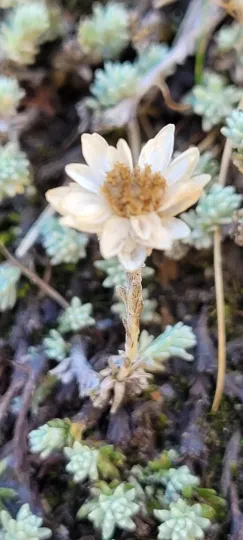
Description
Growing requirements
Castroviejoa frigida is a rare perennial subshrub belonging to the Asteraceae family. It is a strictly endemic species naturally found in the Sierra Nevada mountains of Spain, specifically inhabiting high-altitude rocky screes and alpine meadows.
Botanically, the plant is adapted to extreme environments. It features small, densely pubescent silver leaves that help minimize transpiration and protect the plant from high levels of solar radiation found at high elevations. Its growth form is low and dense, creating a cushion-like structure.
This species has specific climatic requirements. It thrives in regions with cold winters and short, cool growing seasons. When introduced to cultivation, it demands exceptional drainage and a substrate that mimics its natural stony, nutrient-poor environment.
Soil requirements are strict: the plant needs a well-draining, mineral-based soil with a neutral or slightly alkaline pH. It is highly intolerant to nitrogen-rich fertilizers or organic-heavy compost, which can lead to rapid decay or the loss of its characteristic compact shape.
Economically and horticulturally, Castroviejoa frigida is prized as a collector's item for rock gardens and specialized alpine nurseries. Its silvery foliage and ability to withstand harsh temperatures make it a unique addition to xeriscaping projects designed for cold, rocky regions.
Main diseases and pests
The primary threats to Castroviejoa frigida are fungal pathogens, specifically those causing root rot. These diseases are almost always triggered by excessive soil moisture, poor drainage, or inadequate air circulation around the crown of the plant.
Pests are generally not a major concern in the plant's native alpine habitat. However, in domestic cultivation, common opportunistic insects like aphids or mites may attack if the plant is stressed by improper environmental conditions. Preventive maintenance focusing on perfect drainage is the best protection.