
Castor bean
Ricinus communis L.
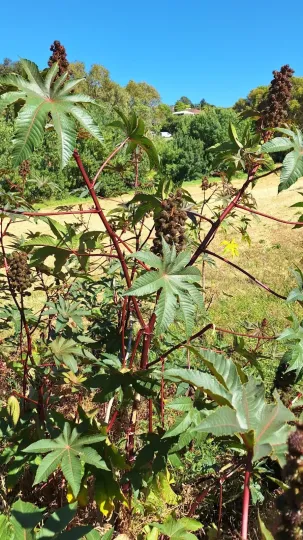
Description
Sowing dates
Planting castor bean requires well-warmed soil, as the seeds germinate best when temperatures remain consistently between 12°C and 14°C at a depth of 10 cm. Cold soil conditions significantly increase the risk of seed decay.
The optimal sowing window typically falls in late spring once the danger of frost has passed. Planting too early in cool, damp soil results in poor stand establishment and uneven plant development across the field.
Proper plant spacing is essential for high yields, with row widths usually ranging from 60 to 70 cm. A consistent planting depth of 6 to 10 cm ensures that roots develop properly, providing stability against high winds.
Using high-vigor, certified seed varieties is critical for uniform emergence. Since the castor plant grows slowly in its early stages, ensuring a strong start is vital to give the crop an advantage over competing weed species.
After seeding, light tillage or mechanical harrowing is often employed to control early-season weeds. This practice also helps maintain soil aeration, which is necessary for the initial root development phase.
Growing requirements
Castor bean is a member of the Euphorbiaceae family and originates from tropical regions, necessitating high levels of heat and sunlight for successful production. It is highly sensitive to cold and frost.
The crop thrives in fertile, well-drained soils, preferably loams or sandy loams that offer good depth. Poorly drained or heavy clay soils often lead to root rot and stunted overall growth.
Although castor is known for its drought tolerance, it requires consistent moisture during critical growth stages like flower initiation and pod filling to maximize oil yield and seed size.
The plant is highly phototropic and requires maximum exposure to solar radiation. Shaded areas or environments with low light intensity are entirely unsuitable for commercial castor bean cultivation.
Soil pH should ideally be near neutral. Highly acidic or alkaline conditions limit the uptake of essential micronutrients, which can negatively impact the plant's overall health and final oil content.
Yield
Average seed yields typically range from 1,000 to 2,000 kg per hectare under standard agricultural conditions. Advanced management practices and irrigation can push these numbers even higher.
The yield is determined primarily by the number of spikes per plant and the number of capsules per spike. Well-managed fields can support plants with multiple productive spikes throughout the season.
Oil content is a primary quality factor, usually ranging from 45% to 55% of the total seed weight. Maximizing oil content requires harvesting when the capsules are mature but before they shatter.
Fertilization management, particularly nitrogen, should be balanced based on soil testing. Excess nitrogen promotes heavy foliage production at the expense of grain yield, while deficiencies limit spike growth.
Genetics play a major role in modern agriculture, with hybrid varieties offering greater uniformity in maturation. This allows for more efficient mechanical harvesting and reduces losses in the field.
Main diseases and pests
Gray mold is among the most severe fungal diseases, especially in climates with high humidity during the maturation phase. It destroys capsules and significantly reduces the final quality of the oil.
Fusarium wilt is a common soil-borne pathogen that causes plant yellowing and eventual death. It is often exacerbated by improper crop rotation practices and poor drainage in the field.
Pests like the castor capsule borer and leaf-feeding caterpillars cause direct damage to the crop. Integrated pest management strategies, including timely insecticide application, are required to mitigate losses.
Soil pests like wireworms and cutworms can devastate newly emerged seedlings. Applying systemic seed treatments is a standard defensive measure against these early-stage underground threats.
Bacterial leaf spot can also affect the foliage, resulting in necrotic lesions. Maintaining good field hygiene and utilizing disease-resistant hybrids are the most effective ways to manage this issue.
Harvesting
Harvesting is the most challenging aspect of castor bean production due to the asynchronous maturation of the seed capsules. Many farmers use chemical desiccants to achieve uniform dry-down before harvest.
Mechanical harvesting requires specialized combines designed to handle the tough outer shells of the capsules. Proper adjustment of the threshing mechanism is vital to avoid cracking or crushing the seeds.
Post-harvest drying is essential to reduce seed moisture content to safe storage levels, typically below 12%. Moist seeds are prone to heating and rapid quality degradation in storage silos.
Worker safety is a major consideration during the harvest process, as the castor plant contains the toxic protein ricin. Protective equipment must be used to prevent contact with seed dust during processing.
Crop residue management involves chopping the remaining stalks and incorporating them into the soil. This helps recycle nutrients and reduces the survival rate of pathogens and insect eggs in the field.