
Willow-leaved carline thistle
Carlina salicifolia
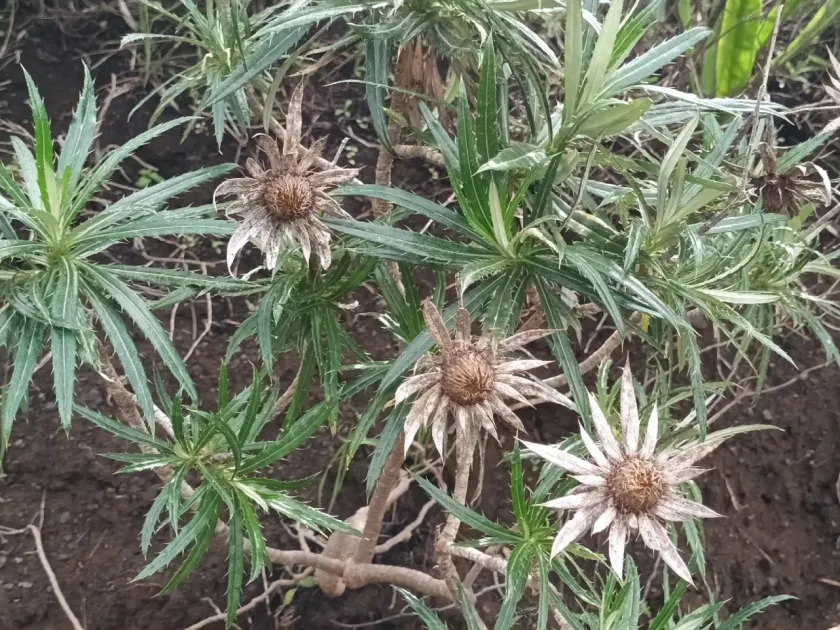
Description
Sowing dates
Sowing Carlina salicifolia is best performed in the spring when soil temperatures reach 12–15°C. To ensure a high germination rate, it is highly recommended to stratify the seeds for four weeks in a cool environment.
Seeds should be sown at a depth of 1–2 cm into a well-draining seed-starting mix. Consistent moisture is vital, but growers must avoid waterlogging, which often leads to seedling damping-off.
Once the first set of true leaves appears, seedlings should be pricked out into individual pots. This practice promotes a healthier root system and makes the transition to the garden bed significantly easier.
Transplanting to the permanent outdoor location should occur after the last frost of the season. A spacing of 30–40 cm is necessary to allow for the development of the basal leaf rosette and proper airflow.
Direct outdoor sowing is only feasible in warm climates where the danger of hard frosts is absent. In most regions, starting plants under glass or in a greenhouse is the preferred method for successful establishment.
Growing requirements
The willow-leaved carline thistle (Carlina salicifolia) is an herbaceous perennial belonging to the Asteraceae family. It is native to the Canary Islands and Madeira, where it grows in rocky and exposed habitats.
This plant thrives in well-draining, gritty, or sandy soils. It is highly intolerant of heavy, clay-based soils that retain too much moisture, as these conditions are detrimental to its root health.
Full sun is a critical requirement for this species. In shaded environments, the plant tends to lose its characteristic form, becomes leggy, and fails to produce the desired display of foliage and flowers.
As a Mediterranean-type plant, it exhibits high tolerance to drought. It does not require frequent irrigation once established, though occasional deep watering during extreme heatwaves can support its vigor.
The species is not frost-hardy and should be treated as a tender perennial or a container plant in temperate climates. Protecting the root zone from excessive winter wetness is as important as shielding it from low temperatures.
Main diseases and pests
Root rot is the most significant threat to the willow-leaved carline thistle. It is typically caused by poorly drained soil or over-irrigation, especially when humidity levels remain persistently high.
Powdery mildew can affect the foliage during periods of stagnant air or high humidity. Maintaining proper spacing between plants is the most effective preventative measure against this fungal disease.
Pests such as aphids and spider mites are known to colonize the plant, particularly under stress. Regular monitoring of the foliage and swift intervention with appropriate horticultural soaps can keep these populations in check.
Over-fertilization, particularly with excessive nitrogen, can lead to soft, weak tissue that is more susceptible to both pest attacks and disease. Balanced mineral feeding is recommended to ensure robust growth.
Sanitation is essential in the garden maintenance cycle. Removing diseased leaves or decaying matter immediately prevents the spread of pathogens throughout the planting area and promotes overall plant longevity.