
Spiny carline thistle
Carlina racemosa
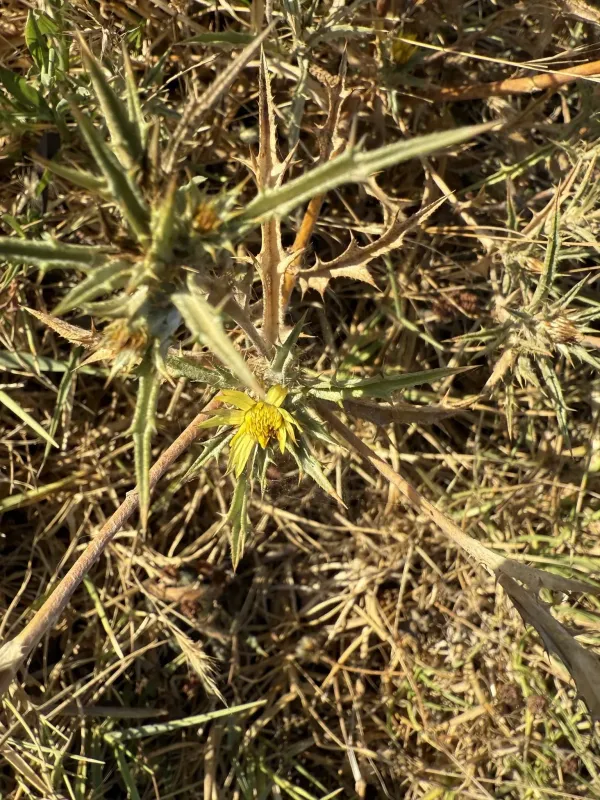
Description
Sowing dates
Carlina racemosa is an annual herbaceous plant that requires precise timing for successful establishment. Planting typically begins in mid-to-late spring once soil temperatures consistently reach 10–12 degrees Celsius, ensuring rapid germination.
Seeds should be sown at a shallow depth of approximately 1 to 2 centimeters to provide sufficient aeration. Proper seed-to-soil contact is essential, often achieved through light rolling after the sowing process to ensure uniform germination across the field.
Row spacing should be maintained between 45 and 60 centimeters to allow for optimal plant development and sufficient light penetration. This spacing also facilitates the use of mechanical weeding equipment, which is critical during the early growth stages of the crop.
In regions with shorter growing seasons, starting the plants in trays and transplanting seedlings is a common and highly effective strategy. This approach significantly shortens the field cycle and reduces the risk of crop failure due to late spring frosts.
The seedling stage is a delicate phase where adequate moisture must be maintained without waterlogging. Monitoring the crop during the first three weeks is vital to ensure an even stand and prevent gaps that might reduce overall productivity.
Growing requirements
This species, belonging to the Asteraceae family, thrives in well-drained, sandy, or loamy soils. It is highly intolerant of waterlogged conditions, which can lead to rapid root degradation and the onset of various fungal infections.
Full sun exposure is a non-negotiable requirement for Carlina racemosa. Sufficient light is not only needed for photosynthesis but also plays a crucial role in the biosynthesis of secondary metabolites, which are essential for the plant's medicinal properties.
The crop demonstrates remarkable resilience to drought once established, making it suitable for regions with limited rainfall. However, maintaining consistent soil moisture levels during the peak vegetative stage will result in significantly higher biomass yields.
Soil pH should remain in the neutral to slightly acidic range. If soils are highly alkaline, soil amendments or acidification treatments should be considered well in advance of the planting season to provide the optimal growing medium.
Nutrient management focuses on moderate nitrogen application in the early stages, followed by higher levels of potassium and phosphorus to support flower head formation. Excessive nitrogen should be avoided as it stimulates leafy growth at the expense of floral development.
Yield
The economic value of Carlina racemosa is derived primarily from its flower heads and roots, which contain valuable compounds like inulin and volatile oils. Harvesting for commercial production is generally performed when the plant reaches its peak flowering maturity.
Average yield expectations for dry biomass typically range from 1.5 to 2.5 tonnes per hectare, depending on soil quality and environmental conditions. Proper field management can often push these yields towards the upper end of the spectrum.
Harvested raw materials must be handled with care to prevent bruising or contamination. Immediate drying post-harvest is essential to preserve the integrity of the phytochemical profile and ensure the highest market grade for the product.
Roots should be harvested only after the plant has begun its natural senescence to ensure maximum concentration of stored carbohydrates and active ingredients. This late-season harvest strategy requires careful planning for field clearance.
Market demand for dried botanical materials and natural floral decoration provides a stable outlet for growers. Maintaining strict quality standards is essential for building long-term relationships with pharmaceutical and floristry buyers.
Main diseases and pests
Fungal diseases, such as powdery mildew, represent a constant threat to the crop, especially in conditions of poor ventilation or high humidity. Integrated pest management strategies, including preventive fungicidal treatments, are often necessary.
Root rot is a major risk on heavy or poorly drained soils. The development of these pathogens is significantly accelerated by excessive soil moisture, which necessitates a strict adherence to soil preparation and drainage management protocols.
Pests like aphids and cutworms can cause significant damage to the plant's structural integrity or floral yield. Regular scouting and monitoring are essential to identify infestations at an early stage when intervention is most effective.
Competition from weed species is most intense during the crop's establishment. A robust weed control program, combining mechanical cultivation and manual weeding, is crucial to prevent resource depletion by invasive weeds.
Small mammals and birds can occasionally cause damage by feeding on seeds or young sprouts. Protective measures like netting or natural deterrents are effective solutions for small-scale plantings where economic damage might occur.
Harvesting
The harvesting process involves precision to ensure the highest quality of the botanical product. Flower heads are harvested during peak bloom to ensure that the chemical profile of the material matches industry standards for herbal supplies.
Post-harvest processing involves immediate drying in controlled environments. Temperatures in the drying facility must not exceed 40 degrees Celsius to prevent the evaporation of volatile oils and the degradation of delicate medicinal compounds.
Root harvesting requires mechanical lifting followed by thorough washing. Removing all traces of soil is vital for meeting pharmaceutical grade standards, as contamination can lead to high microbial counts and rejection of the batch.
Sorting and grading are the final steps before packaging. Each batch should be checked for uniformity, the presence of foreign material, and moisture levels, ensuring it meets the specific requirements of the intended supply chain.
Storage of the dried product must occur in a dark, cool, and dry location. Using breathable packaging materials helps maintain the quality of the dried material for up to two years, ensuring that the therapeutic effectiveness is not compromised.