
Carlina libanotica
Carlina libanotica
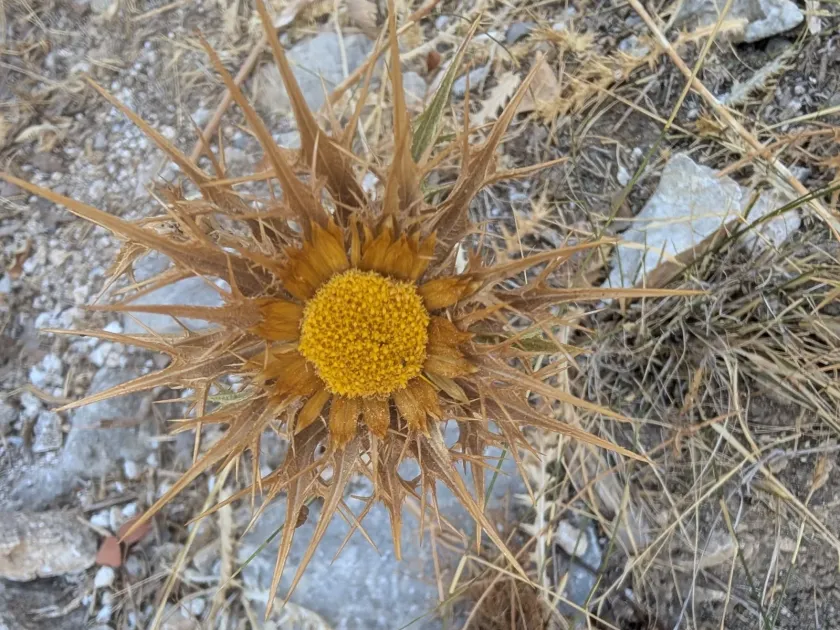
Description
Sowing dates
Carlina libanotica, known as a member of the Asteraceae family, is a hardy perennial typically propagated by seeds. Sowing is best performed in early spring once the soil temperature is stable to ensure germination.
Seeds require a period of cold stratification, usually for about 4 to 6 weeks, to break dormancy. Sowing depth should remain shallow, typically around 0.5 to 1 cm in well-drained, porous media.
The plant demonstrates slow growth during its first year, focusing on establishing a deep taproot and a basal rosette of leaves before transitioning into stem formation in subsequent years.
Spacing requirements are essential for the health of the plant; keeping a distance of 40–50 cm between rows allows for proper light penetration and air circulation to prevent moisture buildup.
Once established, Carlina libanotica is remarkably resilient, capable of thriving in poor, rocky soils where more demanding agricultural crops would fail to survive.
Growing requirements
The primary requirement for this species is a location with full sun exposure. It is a Mediterranean native, so it needs high light intensity to promote robust growth and high-quality floral bracts.
Soil drainage is the most critical factor for success. The plant prefers sandy, gravelly, or calcareous soil profiles with neutral or slightly alkaline pH levels.
Excessive nitrogen fertilization should be avoided as it promotes succulent growth that can be susceptible to winter damage or disease, rather than the woody, drought-resistant structure typical for this genus.
Watering should be minimal. While young plants need consistent moisture to establish their root system, mature specimens are highly drought-tolerant and perform better in drier conditions.
In regions with extremely cold and wet winters, protecting the crown with a layer of mulch is recommended to prevent frost heaving and root rot caused by stagnant water.
Main diseases and pests
Carlina libanotica is generally resistant to many common pests; however, it remains vulnerable to root pathogens if the soil is poorly drained or chronically saturated.
Fungal issues, such as Fusarium or crown rot, are the most frequent threats. Ensuring proper aeration and avoiding overcrowding significantly reduces the likelihood of these outbreaks.
Insect pests, primarily aphids or spider mites, may colonize the plants during hot, arid summer months, causing chlorosis or stunted growth if left unmonitored.
Weed management is vital during the early establishment phase, as the plant grows slowly and can easily be outcompeted by aggressive weeds in the surrounding area.
Using integrated pest management practices, including spot treatments and manual weeding, is the most effective approach for sustaining healthy crops of this species.
Harvesting
Harvesting for dried floral arrangements involves cutting the stems when the flower heads have fully opened but before the seeds begin to shed and disperse.
For best results, bundles should be hung upside down in a dark, dry, and airy location to preserve the color of the bracts and prevent mold from developing.
Seed collection is performed at the end of the season when the heads become dry, brittle, and dark brown, signaling that the embryos are fully matured.
Root harvesting for medicinal use, if intended, should occur in late autumn of the second year. Roots must be washed thoroughly and dried at low heat to maintain their chemical profile.
Proper storage is essential; the final product should be kept in cool, moisture-free containers to prevent degradation of the plant material over long-term storage.