
Carduus myriacanthus
Carduus myriacanthus
Description
Growing requirements
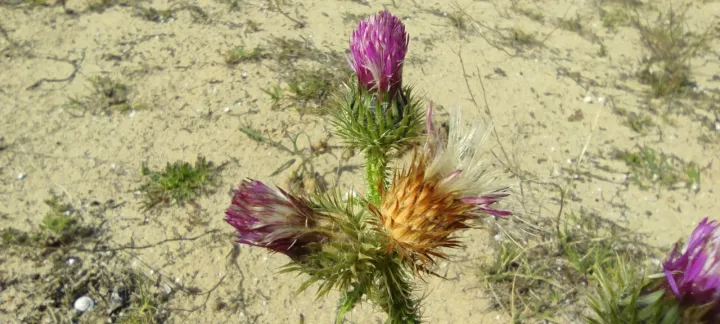
Carduus myriacanthus is a herbaceous plant belonging to the Asteraceae family. Known for its distinct morphological features, this species is well-adapted to arid environments and serves as an important ecological component in various Mediterranean and steppe landscapes.
The crop thrives in well-drained, nutrient-rich soils, preferably with a neutral or slightly alkaline pH. It exhibits excellent tolerance to low-fertility soils, making it capable of growing in areas where other agricultural crops might struggle due to nutritional deficits.
Sunlight exposure is essential for the plant to achieve its full potential, as it naturally evolves in open-field conditions. Reduced light availability typically leads to etiolation and a significant decrease in the production of biomass and secondary metabolites.
Regarding agrotechnical practices, direct seeding in spring is the standard method for establishment. Once the root system is well-developed, the plant becomes highly resilient to drought, eliminating the need for complex irrigation systems.
The climate requirements include a warm, extended growing season. Despite its preference for warmth, Carduus myriacanthus exhibits remarkable frost tolerance, enabling it to survive winter dormancy without specific protection in most temperate agricultural zones.
Main diseases and pests
Fungal diseases, including powdery mildew and rust, represent the primary biological threats. These pathogens typically flourish under conditions of high humidity or poor air circulation, necessitating strategic spatial planning during the sowing process.
Insect pests, specifically weevils and certain lepidopteran larvae, pose a risk to the generative organs of the plant. They target the flowering heads, which can severely impact the quality and quantity of seeds harvested for future production cycles.
Aphid infestations are a recurrent issue during the vegetative stage, often requiring integrated pest management (IPM) strategies to prevent excessive sap loss. Early detection is critical to maintaining the plant's health and structural integrity.
Mites can sporadically appear, particularly during prolonged dry and hot weather cycles. Their presence is usually localized but can expand if not managed, potentially causing chlorosis and reduction in overall plant vigor across the field.
Effective management strategies should focus on preventive measures, such as maintaining appropriate plant spacing to ensure optimal airflow and removing infected debris to minimize the survival of pathogens in the soil during the winter season.