
Arctic rockcress
Cardaminopsis petraea
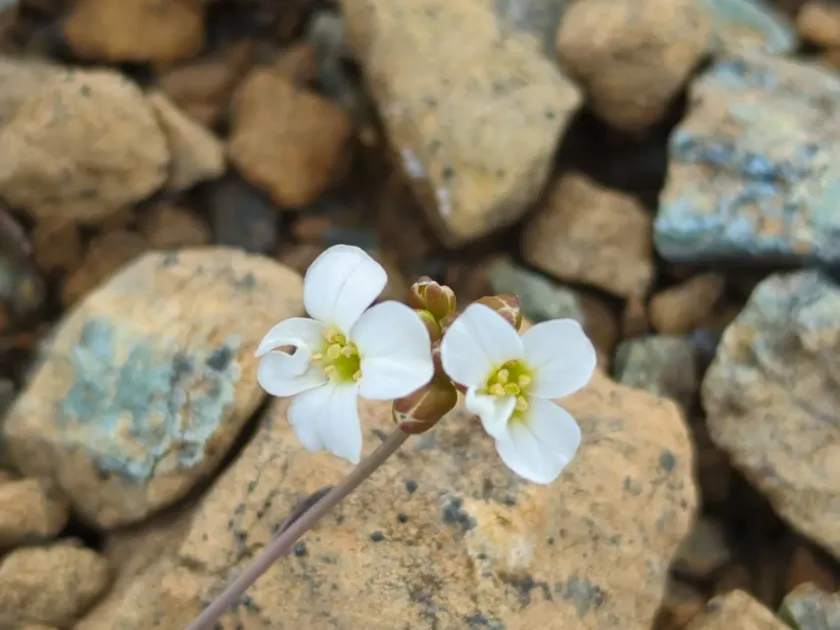
Description
Sowing dates
Arctic rockcress (Cardaminopsis petraea) belongs to the Brassicaceae family. In cultivation, seeds are sown in late autumn or early spring after undergoing a cold stratification period.
Sowing is carried out in light, well-drained substrate at a depth of no more than 0.5–1 cm. The optimal temperature for seed germination is between 15–18 degrees Celsius.
When sown in spring, seedlings usually emerge within 2–3 weeks, although the plant primarily forms a basal rosette of leaves during the first year.
Propagation is also possible via vegetative methods, such as division or stem cuttings during the summer, ensuring the preservation of specific plant traits.
Planting density depends on landscape goals: typically, 9–12 plants per square meter are used to establish a dense, ground-covering mat.
Growing requirements
The culture thrives in open, well-lit areas, as shaded conditions cause the stems to stretch and lose their desirable ornamental density.
Arctic rockcress is highly sensitive to waterlogging, requiring sandy or loamy soils with a high gravel content for proper root development.
As a calcicole, the plant performs best in alkaline or neutral soils that contain sufficient levels of lime or calcium.
The plant demonstrates high drought tolerance, which is characteristic of alpine or rocky-habitat species, requiring only moderate watering.
The species exhibits excellent winter hardiness, allowing it to grow in most temperate regions without the need for additional winter protection.
Main diseases and pests
Excessive soil moisture is the primary threat to the crop, as it often leads to the development of crown and root rots.
In conditions of high humidity, the plant may suffer from powdery mildew, necessitating preventative fungicide treatments or the removal of infected foliage.
Among pests, crucifer flea beetles are the most damaging, as they frequently feed on young leaves during the early spring growth phase.
Aphids can also pose a risk by colonizing flower stalks, which drains the plant's resources and reduces its overall flowering intensity.
Integrated pest management, including regular field monitoring and the use of biological insecticides, is recommended for maintaining plant health.