
Cansjera rheedii
Cansjera rheedii
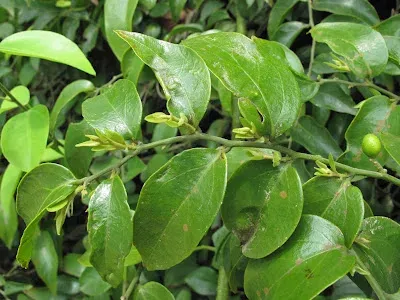
Description
Growing requirements
Cansjera rheedii is a woody climbing plant or shrub belonging to the family Opiliaceae. It functions as a root hemiparasite, meaning it derives some of its nutrients by tapping into the root systems of nearby host trees.
Native to the tropical regions of India, Sri Lanka, and Southeast Asia, this species thrives in humid lowland forests and thickets. It is an essential component of the tropical understory where it utilizes vertical space for development.
The plant requires high humidity, consistent tropical temperatures, and protection from frost or severe drought. Fertile, well-draining soils with a near-neutral pH are ideal for supporting the growth of its root system and maintaining health.
Botanically, it features alternate simple leaves and small, dense spikes of flowers. The fruit is a small, bright orange or red drupe that provides distinct visual characteristics during the maturation phase in the tropics.
Cultivation is challenging due to the plant's hemiparasitic nature, requiring an appropriate tree host for establishment. Agronomic practices focus on maintaining the ecological balance of the host-parasite system and ensuring soil moisture.
Harvesting
Cansjera rheedii is primarily valued for its traditional medicinal properties. Indigenous communities have historically used its roots, bark, and leaves in decoctions to treat inflammatory conditions and various skin ailments.
Recent scientific interest has focused on the bioactive compounds found in the plant, such as flavonoids and alkaloids, which exhibit antimicrobial potential. These findings contribute to its importance in ethnopharmacological research.
Sustainable harvesting is crucial for preserving wild populations. Because the plant grows in association with other trees, collection efforts must be carefully managed to avoid damaging the ecosystem and the host trees themselves.
While the fruits are edible, they are mostly consumed locally rather than作为 a commercial crop. Their nutritional value remains a subject of ongoing study to determine potential health benefits for wider consumption.
Future agricultural potential lies in studying its phytochemical properties for the cosmetics and pharmaceutical industries. Its ability to thrive in specific tropical niches makes it a unique candidate for controlled botanical research.