
Australian Canarium
Canarium australianum
Description
Growing requirements
The Australian Canarium (Canarium australianum) is a prominent species within the Burseraceae family. Native to tropical northern Australia and parts of New Guinea, it is a significant botanical resource in its region.
This tree thrives in warm, tropical climates, requiring consistent temperatures and protection from frost. It is typically found in monsoon forests and gallery forest environments where rainfall is seasonal but significant.
Regarding soil requirements, the species prefers deep, well-drained loamy soils. It has a high tolerance for varying soil types but performs best where organic matter is abundant and soil structure supports deep root penetration.
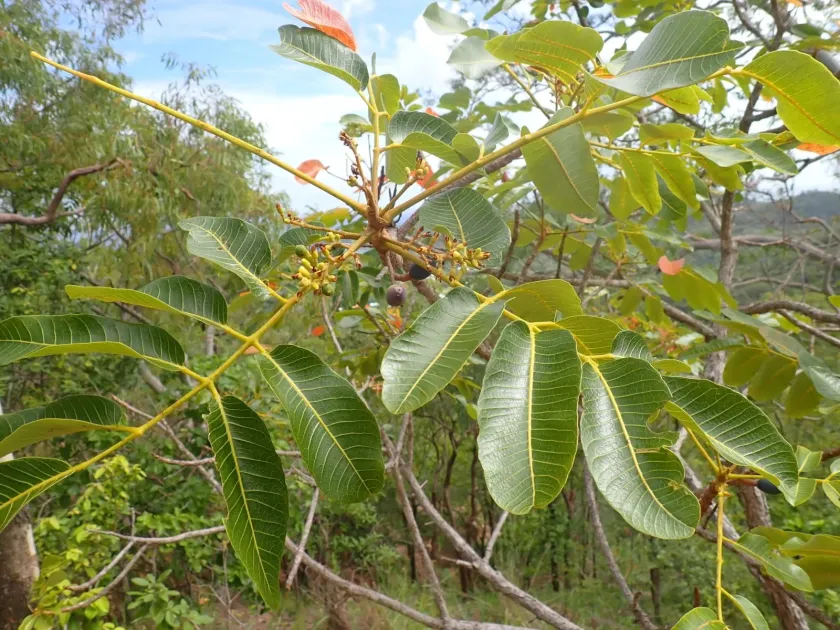
The Australian Canarium is known for its tall growth habit, often reaching considerable heights in its natural forest setting. It produces dense, dark green foliage and small, clustered flowers, eventually yielding fruit with high-quality kernels.
Economically, the tree is highly regarded for its edible nuts, which serve as an important food source. The resin harvested from the trunk has traditionally been used in various medicinal and cultural applications, highlighting the tree's versatility.
Main diseases and pests
Pest management for Canarium australianum focuses on controlling wood-boring beetles that can infest the trunk and larger branches. These pests can compromise the tree's structural integrity if left unchecked.
Fungal pathogens such as leaf spot and various rots are prevalent in high-humidity conditions. Maintaining optimal spacing between trees is critical to ensure proper airflow and prevent disease outbreaks.
In commercial settings, integrated pest management (IPM) is utilized to monitor for infestations. This involves regular visual inspections and the use of natural predators to control insect populations.
Nutritional stress can make the trees more susceptible to opportunistic diseases. Therefore, a balanced fertilization program is essential to maintain tree vigor and resistance to biological threats.
- Regular pruning of dead or diseased branches
- Monitoring for sap exudation as an early sign of infection
- Implementation of proper irrigation to prevent waterlogging
- Use of neem-based oils for mild pest issues