
Camphorosma songorica
Camphorosma songorica
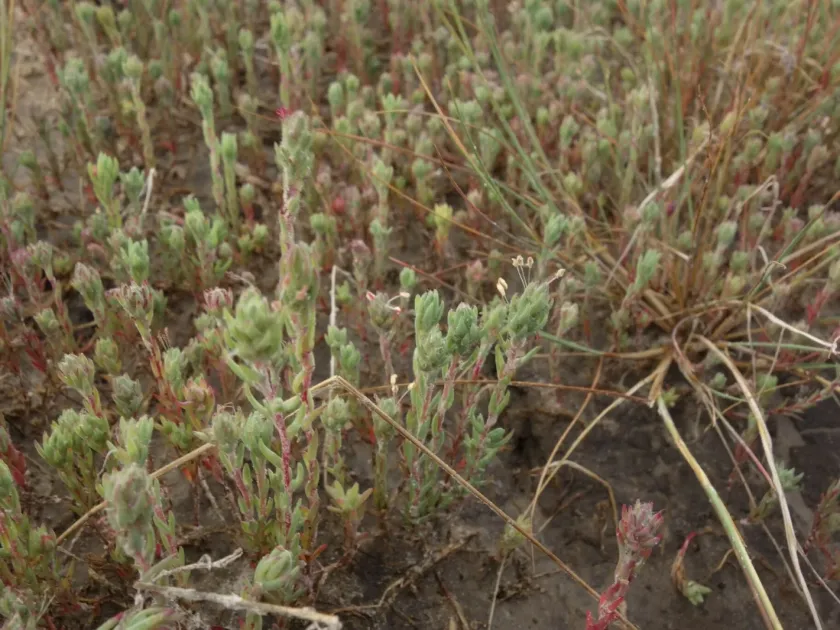
Description
Growing requirements
Camphorosma songorica is a perennial subshrub belonging to the Amaranthaceae family. It is widely recognized as a highly specialized halophyte, adapted to thrive in saline environments where soil salinity would be toxic to conventional agricultural crops.
The plant features a dense, pubescent stem structure that reduces water loss through transpiration. Its root system is deep and expansive, allowing the plant to reach deep-seated moisture in arid desert conditions.
Its natural range covers the arid and semi-arid zones of Central Asia. The species is typically found on solonchaks and salt-affected lands, demonstrating remarkable physiological tolerance to high concentrations of sodium and chlorine ions.
Regarding climate, the plant requires high solar radiation and low atmospheric humidity. It is exceptionally hardy, capable of surviving extreme temperature fluctuations, ranging from intense summer heat to severe winter frosts common in the region.
In terms of soil, it prefers alkaline, saline-sodic soils with good physical structure. It does not require intensive fertilization, as it is biologically optimized to grow in nutrient-poor environments, relying on its symbiosis with soil microbes for survival.
Yield
Camphorosma songorica serves as a crucial forage resource for nomadic and semi-nomadic livestock systems. It provides essential grazing during the autumn and winter seasons when other vegetation types are unavailable or dormant.
Yield capacity is generally low but reliable. In favorable years, the biomass production can support essential herd maintenance, making it a critical strategic reserve for pastoralists living in harsh desert climates.
The nutritional profile of the plant is bolstered by its moderate protein content and presence of mineral salts, which benefit livestock health. Despite its characteristic camphorous odor, animals graze it readily once they become acclimated.
The role of this crop in land rehabilitation is significant. By stabilizing loose soils and lowering soil pH over time through the deposition of organic matter, it helps restore degraded ecosystems in saline-affected areas.
Management of these ranges requires a rotational grazing system to prevent overgrazing. Since the plant reproduces primarily by seed, allowing it to complete its life cycle is essential for maintaining rangeland productivity over multiple years.