
Camissonia contorta
Camissonia contorta
Description
Sowing dates
Sowing should be performed in early spring once the risk of severe frost has passed. Seeds are extremely small and should be broadcast or sown in shallow rows, barely covered with fine soil or sand to ensure proper light exposure for germination.
Maintaining a correct sowing density is vital. Providing sufficient space between individual plants prevents the development of stagnant air zones, which are detrimental to this species' overall health.
While the plant is drought-tolerant once established, the germination phase requires consistent but light moisture. Avoid heavy irrigation that might wash the seeds away or cause crusting of the soil surface.
Strategic thinning is recommended if the germination rate is high. Removing weaker seedlings allows the remaining plants to develop strong root systems, which is the primary factor in the plant's ability to survive later in the season.
Site preparation must focus on weed eradication. As an annual, Camissonia contorta does not have a large canopy, making it vulnerable to competition from faster-growing vegetation in the early growth stages.
Growing requirements
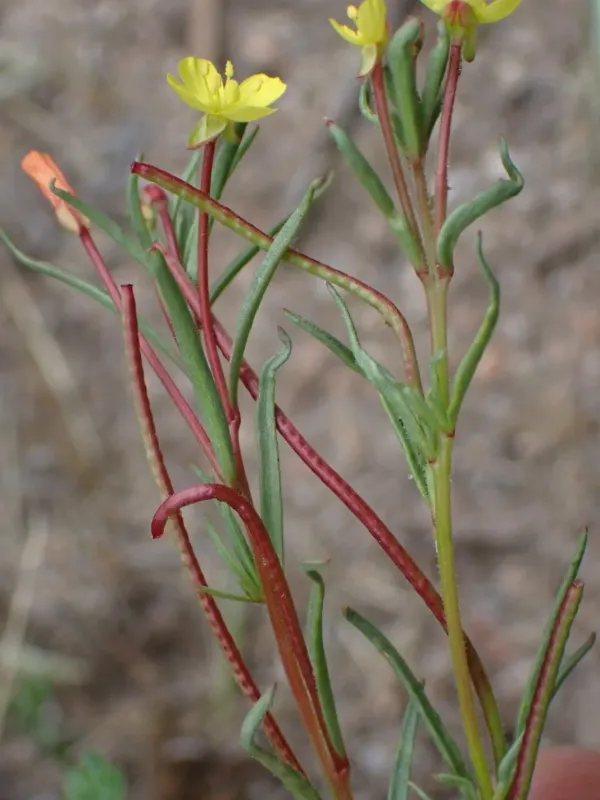
Camissonia contorta is a herbaceous annual plant belonging to the Evening Primrose family (Onagraceae). It is native to the western regions of North America, where it thrives in sandy, open habitats and disturbed soils.
The plant is characterized by its slender, often contorted stems, reaching a height of up to 40 centimeters. Its foliage is sparse, with narrow, linear leaves that allow the plant to thrive in regions with high solar radiation and periodic water scarcity.
The yellow flowers, which often feature distinct reddish spots at the base of the petals, are a hallmark of the species. They play a significant role in supporting local pollinator populations during the early spring flowering season.
Soil requirements are quite specific: the plant demands well-drained, sandy or gravelly substrates. It cannot tolerate heavy, clay-rich soils that retain moisture, as these conditions rapidly lead to the decay of the taproot system.
Climatic preferences include full sun exposure and a dry environment. The species is highly adapted to the Mediterranean-like climate, efficiently utilizing spring rains and entering dormancy before the onset of the hottest summer temperatures.
Main diseases and pests
Fungal diseases are the primary threats, especially root and crown rots. These are usually triggered by poor drainage or excessive humidity levels during the cooler months of the growing season.
Insects such as aphids can cause damage during the active flowering period. Small-scale infestations can be managed manually or with light horticultural soap applications to protect the delicate flower buds.
Soil-borne nematodes represent a hidden threat that can impede nutrient uptake. Proper crop rotation or site selection in fresh soil is the most effective way to prevent these subterranean issues.
Slugs and snails may attack young seedlings, particularly if the spring season is unusually wet. Using physical barriers around the patch can effectively deter these pests without resorting to chemical solutions.
Nutrient toxicity, particularly from excessive fertilizer, can weaken the plant's natural resilience. It is better to allow the plant to grow in its natural, nutrient-poor substrate rather than forcing growth with artificial stimulants.