
Buttonbush
Cephalanthus occidentalis L.
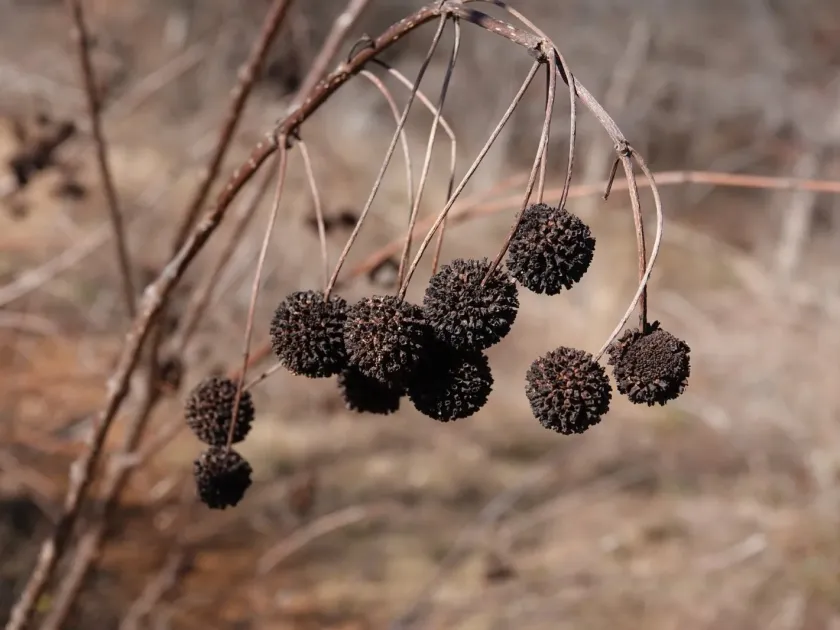
Description
Growing requirements
Buttonbush (Cephalanthus occidentalis L.) is a deciduous shrub belonging to the Rubiaceae family, widely recognized for its globose, nectar-rich flowers that attract numerous pollinators.
This species is naturally adapted to wet environments, thriving in floodplains, swamps, and pond margins, making it an excellent choice for stabilizing soil in aquatic landscapes.
Optimal growth requires full sun to partial shade exposure, though flowering is most prolific in areas receiving at least six hours of direct sunlight per day.
The plant demands consistently moist, acidic to neutral soils; it is remarkably tolerant of standing water and saturated soil conditions that would kill most other ornamental shrubs.
In terms of agricultural management, regular pruning is recommended to maintain a manageable shape and to encourage the growth of new wood, as flowers are produced on current-season shoots.
Main diseases and pests
Buttonbush is generally considered a low-maintenance plant with high pest resistance, yet it remains susceptible to specific insects if the growing conditions are not met.
Aphids and spider mites are the most common pests observed on foliage, particularly during dry spells, which may require localized treatment with horticultural soaps or oils.
Leaf spots caused by fungal pathogens can emerge during prolonged periods of high humidity and poor air circulation, necessitating thinning of the inner canopy branches.
While the plant is highly resistant to many garden pests due to its secondary metabolites, vigilance is required to prevent early-season damage to young, tender growth.
Monitoring for signs of chlorosis or leaf drop is essential, as these often serve as indicators of nutrient deficiency or significant changes in soil pH levels that affect root uptake.