
Flowering rush
Butomus
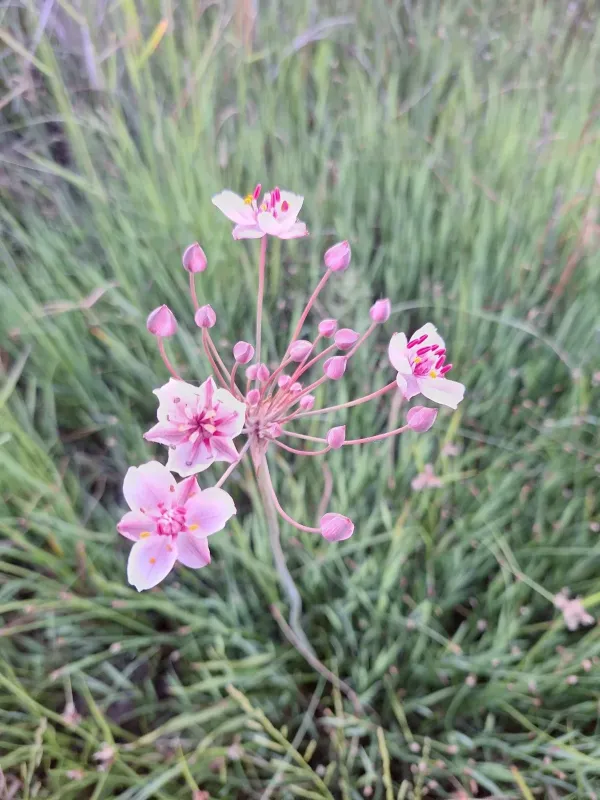
Description
Sowing dates
Flowering rush (Butomus umbellatus) is a perennial aquatic plant belonging to the Butomaceae family. It spreads naturally through rhizome division and seed dispersal in wetland environments.
Sowing seeds is best performed in early spring in water-saturated substrates, ensuring high light exposure, which is vital for the germination of this light-sensitive species.
Vegetative propagation via rhizome division is the preferred method for establishing crops. Segments of the rhizomes are planted into the pond bottom at a depth of 10 to 30 centimeters.
The optimal planting window is spring, when water temperatures reach 12–15 degrees Celsius, allowing the roots to anchor firmly before the peak heat of summer.
Planting density should be managed to provide at least 30–40 centimeters of space between individual clumps, ensuring sufficient nutrient absorption for vigorous growth.
Growing requirements
Flowering rush thrives in shallow, sunlit waters. It is sensitive to shade, which can inhibit flowering and result in weak, elongated leaf growth.
The plant requires nutrient-rich silt or clay-heavy soils. It performs best in stagnant or slow-moving water, making it suitable for irrigation canals, ponds, and wetlands.
Depth tolerance is excellent, ranging from 10 to 50 centimeters. It is well-adapted to fluctuating water levels, a common trait for riparian and aquatic flora.
The ideal temperature range for rapid vegetative growth is 18–25 degrees Celsius. The species is highly cold-tolerant and can survive winter in frozen ponds.
Strong water currents should be avoided as they can damage the plant's long, sword-shaped leaves. Protection from heavy wave action is crucial for maintaining a healthy stand.
Yield
Economic yield is measured by the biomass of starch-rich rhizomes. In traditional agricultural settings, these can be processed for livestock feed or human food supplements.
High yields depend on the trophic level of the aquatic environment. A well-managed stand can support a density of 25–30 plants per square meter.
The optimal harvest window for rhizomes is during the autumn dormancy phase, when the plant concentrates carbohydrates and nutrients in its subterranean structures.
Apart from the rhizomes, the aerial biomass can be harvested as a component for forage if processed correctly to ensure digestibility and nutrient retention.
With an average starch content of 30–40 percent in dried rhizomes, the crop holds potential for specialized starch production in aquatic agriculture.
Main diseases and pests
Flowering rush is generally resistant to most diseases. However, in overly dense populations with poor water circulation, fungal leaf spot infections may occur.
Insects, particularly larvae of midges and certain moth species, can damage the submerged parts of the plant, potentially weakening the entire stand if left unchecked.
Vertebrate pests such as muskrats can cause significant damage by consuming the nutritious rhizomes, which may lead to patches of thin vegetation.
Eutrophication of water bodies poses a risk as aggressive algae or invasive weeds can outcompete the rush for light and space during the early growing season.
Chemical contamination, including herbicide runoff from nearby fields, is highly detrimental and can cause severe physiological stress or death of the root system.
Harvesting
Harvesting is typically done during the late autumn period (September to November) before the first significant frost, using manual tools or small mechanical rakes.
Rhizomes are carefully washed to remove mud and debris, followed by cleaning and preparation for drying to ensure the preservation of stored starch content.
Drying is performed at controlled temperatures (40–50 degrees Celsius) to prevent spoilage and maintain the quality of the dried end product.
Storage requires cool, dry, and well-ventilated areas to prevent mold growth, which can quickly degrade the nutritional value of the harvested rhizomes.
Sustainable harvesting practices, such as leaving a portion of the rhizome system in the sediment, are essential to ensure the field regenerates for future seasons.