
Butomopsis latifolia
Butomopsis latifolia
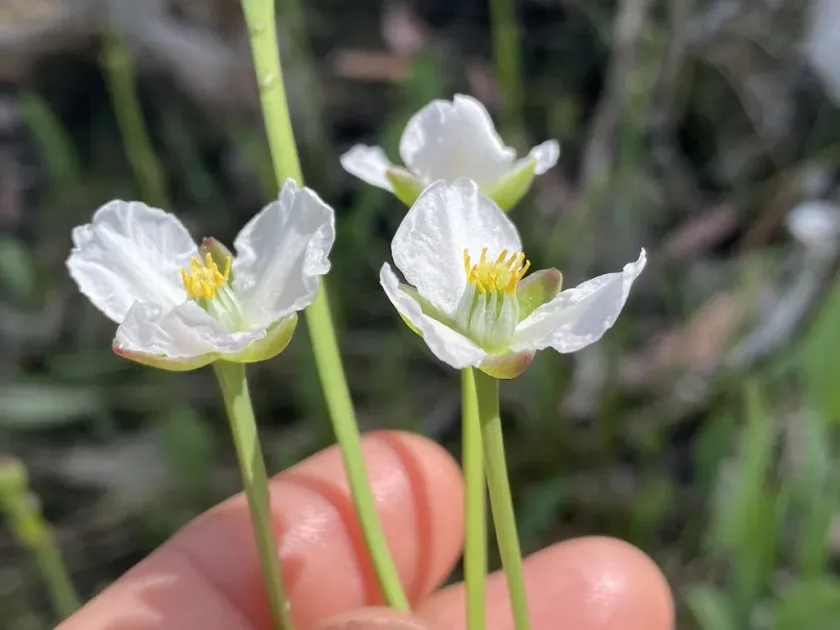
Description
Growing requirements
Butomopsis latifolia is a perennial aquatic herbaceous plant belonging to the Alismataceae family. It is a specialized plant that thrives in shallow water environments, marshes, and saturated substrates, playing a significant role in its native wetland ecosystems.
The plant originates from tropical and subtropical regions of Africa and Asia. It is naturally adapted to stagnant or slow-moving water bodies, where it forms dense stands. This evolutionary background dictates its specific demands for warm, stable climates and high environmental humidity.
To cultivate Butomopsis latifolia successfully, one must provide a rich, muddy soil medium. The substrate should be highly organic, capable of maintaining moisture consistently, and should possess a slightly acidic to neutral pH profile to support optimal nutrient uptake.
The thermal requirements for this crop are strict: it requires consistently warm conditions throughout the growing season. Frost is detrimental to the plant, and in non-tropical zones, it is typically grown under greenhouse conditions or in indoor aquaculture setups to ensure year-round development.
In terms of practical use, the plant is valued for its aesthetic appeal in landscape design, particularly in pond and water garden management. Furthermore, it is increasingly studied for its phytoremediation potential, as its extensive root system can absorb excess nitrogen and phosphorus, helping to purify water in managed ecological systems.
Main diseases and pests
The primary threats to Butomopsis latifolia are root rot pathogens and various water-borne fungi. These diseases often emerge when the water quality deteriorates or when there is insufficient water circulation, leading to anaerobic conditions in the substrate.
Pests such as aquatic snails and certain beetle species are known to cause damage to the foliage. Monitoring for these pests is essential, especially in controlled environments, to prevent rapid infestation that can compromise the plant's health and visual quality.