
Burchellia bubalina
Burchellia bubalina
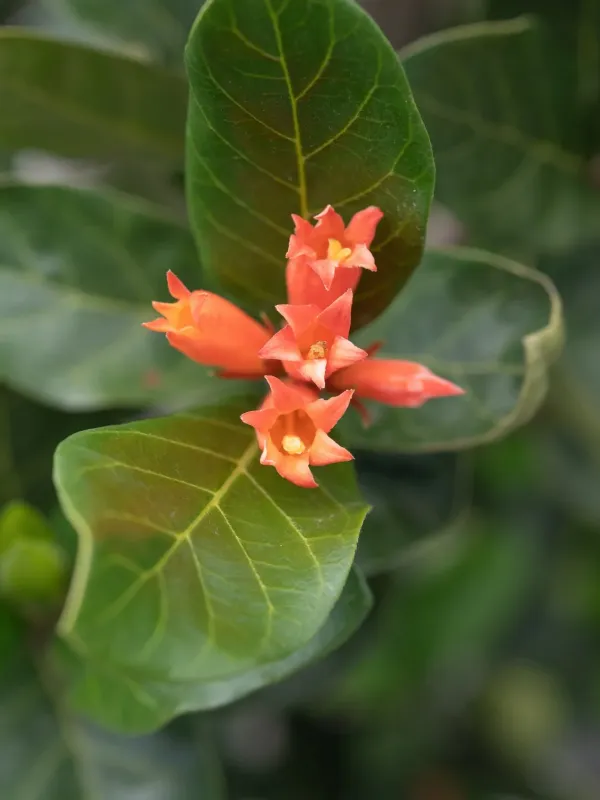
Description
Growing requirements
Burchellia bubalina, commonly known as the buffalo thorn, is an evergreen shrub or small tree belonging to the Rubiaceae family. Native to the southern regions of Africa, this plant is highly valued for its striking, waxy, orange-to-red tubular flowers.
The plant thrives in regions with warm, temperate climates and requires a sheltered location with bright, indirect sunlight. It is not frost-tolerant, meaning it must be protected or brought indoors during winter months in colder gardening zones.
Soil quality is paramount for successful cultivation. Burchellia bubalina requires a rich, well-draining substrate that mimics forest soil. It performs best in slightly acidic to neutral pH levels and requires consistent moisture without ever becoming waterlogged.
Agrotechnical care includes regular fertilization during the growing season to support continuous foliage development and blooming. Using high-quality organic compost or balanced liquid fertilizers helps maintain plant vigor throughout the peak heat of summer.
Maintenance pruning is essential to preserve the structural integrity and shape of the shrub. By removing dead wood and thinning out dense branches in the early spring, gardeners ensure better light penetration and air circulation throughout the inner canopy.
Main diseases and pests
The most significant threat to Burchellia bubalina is root rot, typically caused by overwatering or poorly draining soil. Ensuring proper moisture balance and air infiltration in the root zone is the primary defense against this fatal fungal condition.
Aphids and scale insects are the most common pests affecting this shrub. These insects cluster on tender stems and the undersides of leaves, weakening the plant by extracting sap and potentially introducing viral diseases that cause leaf curling.
Spider mites can become problematic in low-humidity environments, such as indoor settings or during hot, dry spells. Regular misting and proper irrigation are effective preventative measures, as these pests despise damp conditions.
Powdery mildew can occur if there is insufficient air movement around the plant. To prevent this, spacing plants adequately and avoiding overhead watering in the late evening is strongly recommended by experienced horticulturists.
Soil-borne nematodes can pose a risk in areas with sandy or untreated soil. Maintaining soil health through the addition of organic matter and using sterile potting mixes for container-grown plants are effective ways to mitigate this risk.