
Brighamia insignis
Brighamia insignis A. Gray
Description
Growing requirements
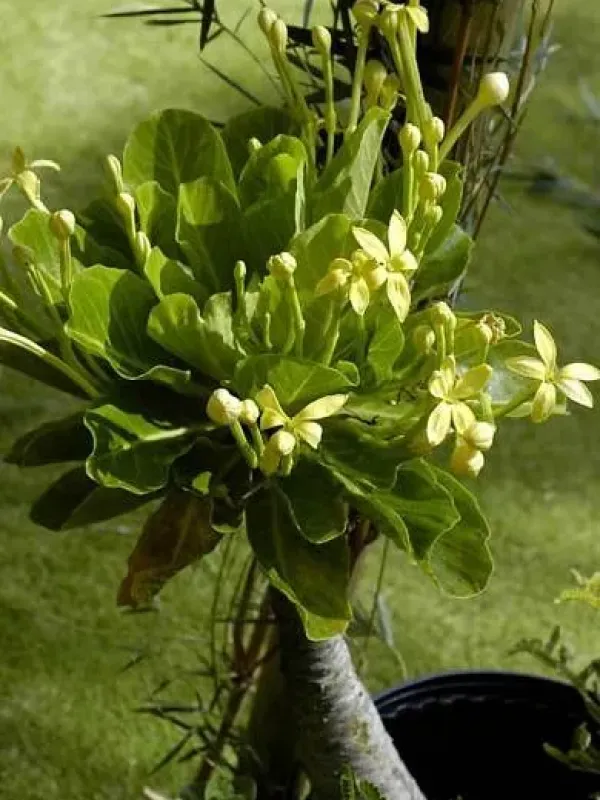
Brighamia insignis, commonly known as the vulcan palm or cabbage-on-the-rocks, is a succulent plant belonging to the Campanulaceae family. Native to the Hawaiian Islands, it is critically endangered in its natural habitat and is primarily grown as a botanical curiosity.
The plant is biologically adapted to steep, cliff-side environments. Its succulent stem serves as a reservoir for moisture and nutrients, allowing the plant to thrive during periods of limited rainfall. It features a rosette of soft, obovate leaves that crown the top of the stalk.
Cultivation requires bright, indirect light conditions. While the plant appreciates morning sun, intense midday exposure should be avoided to prevent foliar scorching. Consistent light levels are essential to maintain the structural integrity and compact form of the stem.
The soil substrate must be highly porous and well-draining to prevent root rot. A standard mix for succulents, supplemented with volcanic rock or pumice, is highly recommended to mimic the aeration of its natural rocky environment.
Temperature management is critical. Brighamia insignis performs best in temperatures between 18°C and 25°C. It is sensitive to cold drafts and should be protected from temperatures below 12°C, which can cause dormant-like stress or complete leaf shedding.
Main diseases and pests
Spider mites are the most prevalent pest for this species, especially in indoor environments with low humidity. Regular monitoring of the underside of leaves is necessary to detect infestations early before significant damage occurs.
Overwatering remains the primary cause of mortality for this plant. Excess moisture leads to soft rot of the base and root system. It is vital to ensure that the potting medium dries out significantly between waterings to prevent the development of harmful fungal pathogens.