
Brick cap
Naematoloma sublateritium (Fr.) Karst.
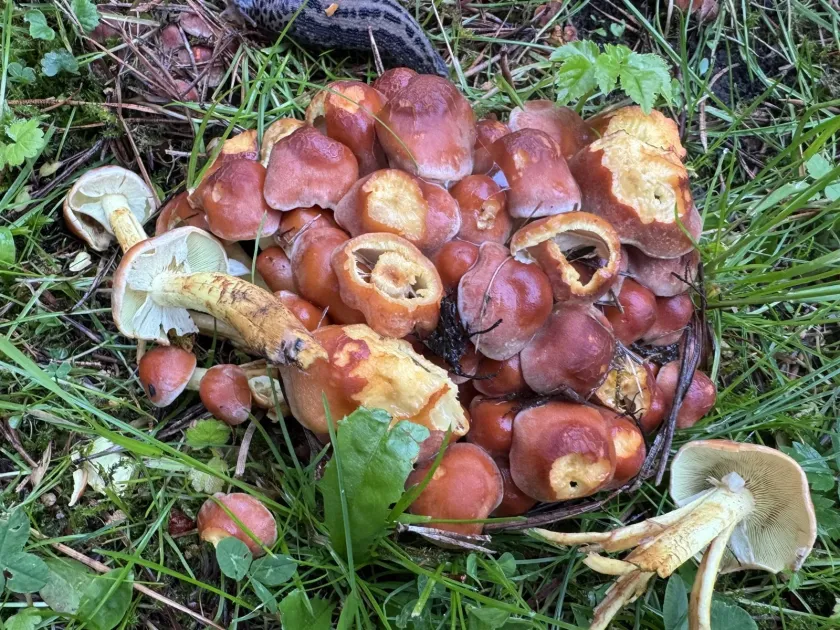
Description
Sowing dates
Inoculation of the substrate with brick cap mushroom spawn is typically performed in a clean room environment to ensure the purity of the culture.
Substrate blocks are prepared using wood-based materials, such as hardwood sawdust, mixed with nutritional supplements to mimic the natural decaying log environment.
Proper moisture content within the block, maintained at approximately 65-70%, is crucial for the successful initial spread of the mycelium through the substrate.
After inoculation, the blocks are moved into climate-controlled incubation chambers where the temperature is kept steady to encourage aggressive mycelial colonization.
The total colonization period depends on the spawn rate and substrate density, typically requiring between four to six weeks to reach full maturity.
Growing requirements
The brick cap, scientifically known as Hypholoma sublateritium, belongs to the Strophariaceae family and thrives on decaying wood in temperate forests.
For optimal growth, the species requires a transition from warmer incubation temperatures to cooler fruiting temperatures, ideally between 12 and 18 degrees Celsius.
High relative humidity, ranging from 85% to 95%, is essential during the fruiting phase to ensure that the mushroom caps develop fully without drying out.
Adequate ventilation is necessary to keep carbon dioxide levels low, which prevents the formation of elongated, weak mushroom stems in confined spaces.
Light levels are also an important environmental variable, as brick caps require consistent indirect light to trigger proper development of their characteristic red-brick caps.
Yield
Yield efficiency for brick cap cultivation is measured by the biological efficiency ratio, which typically achieves 20-25% of the substrate's dry mass weight.
Proper management of the growing environment allows for multiple harvests from a single substrate block, with the first flush usually being the most productive.
The number of fruiting bodies per cluster can be optimized by adjusting the number of initiation sites on the surface of the mushroom blocks.
Nutritional additives, specifically nitrogen-rich sources like wheat bran, help to significantly increase the overall yield and consistency of the harvest.
Monitoring the metabolic heat generated by the mycelium during the peak fruiting phase is essential to prevent localized overheating of the blocks.
Main diseases and pests
Fungal contamination, particularly green mold like Trichoderma, is the primary threat that can outcompete the brick cap mycelium for resources.
Fungus gnats and their larvae present a significant challenge by feeding on the delicate mycelium and potentially introducing harmful pathogens into the culture.
Bacterial blotch occurs when excessive moisture sits on the caps, often due to poor airflow or excessive humidity coupled with inadequate ventilation cycles.
Mite infestations can cause structural damage to the hyphae, leading to stunted growth and reduced yields in commercial mushroom farming operations.
Maintaining a rigorous sanitation schedule and utilizing filtered air systems are the most effective strategies for preventing common mushroom pests and diseases.
Harvesting
Harvesting should be performed just before the veil on the underside of the cap breaks, ensuring the mushrooms retain their firmness and aesthetic appeal.
Individual clusters are harvested by cutting them at the base of the stem, ensuring that the substrate surface remains intact for subsequent production flushes.
Immediate post-harvest cooling is required to prevent the mushrooms from breaking down and to extend their shelf life in the retail distribution chain.
The harvested product should be stored in ventilated containers to avoid anaerobic conditions, which can lead to rapid deterioration of the mushroom tissues.
Careful handling during the packing process is essential to prevent bruising and to ensure that the brick caps maintain their market-grade quality.