
Sucupira
Bowdichia nitida Spruce ex Benth.
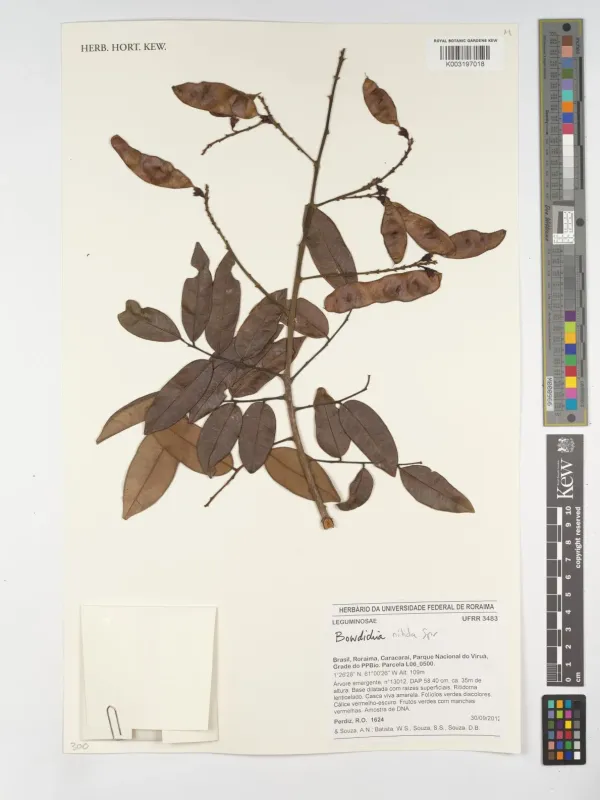
Description
Growing requirements
Sucupira (Bowdichia nitida) is a significant tropical hardwood tree belonging to the Fabaceae family. It is widely recognized for its robust growth habit and high-density wood properties.
Native to the tropical regions of South America, particularly within the Amazon basin and Brazil, this species thrives in climates characterized by consistent warmth and abundant precipitation throughout the year.
The tree requires well-drained, nutrient-rich soils to reach its full potential. It is sensitive to waterlogging, necessitating landscapes with proper drainage to ensure the health of its expansive root system.
In terms of growth dynamics, Bowdichia nitida is known for its resilience and adaptability. It forms a critical component of the tropical forest canopy, competing effectively for sunlight in its natural habitat.
Silvicultural management of Sucupira involves careful monitoring of sapling density and protection against invasive species. As a slow-growing hardwood, it requires patience and sustainable forest management practices to be commercially viable.
Harvesting
The primary utility of Sucupira lies in its premium timber. The wood is exceptionally hard, durable, and naturally resistant to rot and insect infestations, making it highly coveted for high-end carpentry.
Major applications for this wood include the manufacturing of luxury furniture, high-traffic flooring, and heavy-duty structural components. Its reddish-brown color and interlocking grain add aesthetic value to finished products.
Timber harvesting operations are conducted under strict sustainability guidelines. Because the trees mature slowly, harvest cycles are carefully planned to ensure the long-term viability of forest stands.
Beyond timber, Sucupira has gained attention in the field of phytochemistry. Scientific interest focuses on the medicinal properties of its bark and extracts, which contain compounds studied for their analgesic and anti-inflammatory potential.
Ultimately, Sucupira stands as a pillar of tropical forestry, combining ecological importance with immense economic value, ensuring its place in both global construction markets and modern pharmacological research.