
Biophytum sensitivum
Biophytum sensitivum DC.
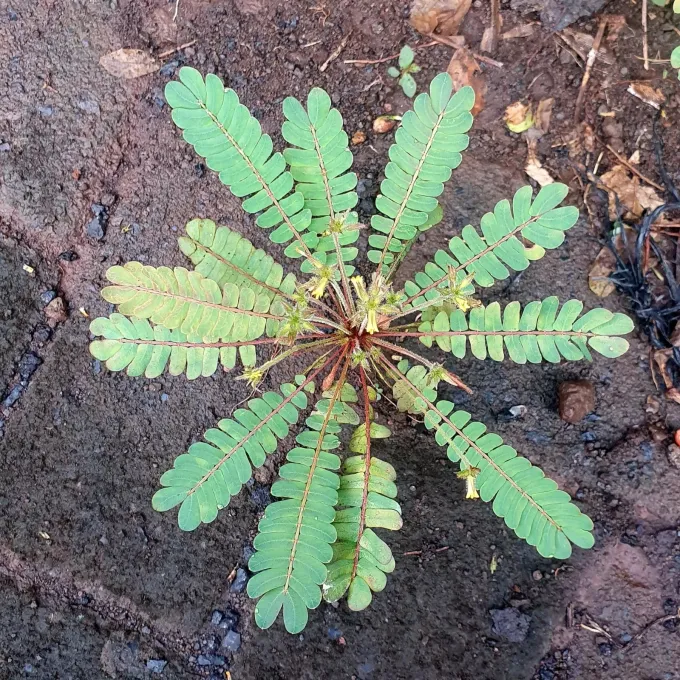
Description
Sowing dates
Biophytum sensitivum belongs to the Oxalidaceae family and is an intriguing herbaceous plant often nicknamed the "little tree plant" due to its palm-like appearance. It reproduces primarily through seeds that develop in small capsules following pollination.
For successful germination, sow the seeds in early spring using a light, well-draining substrate composed of peat and perlite. Maintain a soil temperature of approximately 24 degrees Celsius and keep the surface moist.
Seeds should be sown superficially, as they require light to germinate effectively. Covering the container with a transparent lid or plastic wrap will create the necessary humidity levels for the seedlings to emerge within two to four weeks.
Once the seedlings develop their first true leaves, they should be carefully pricked out into individual small pots. The roots are delicate, so handling must be done with extreme precision to avoid stunting the plant's growth.
In optimal tropical conditions, this plant is known for its ability to propagate via self-seeding, often spreading throughout the growing area if the substrate remains consistently damp.
Growing requirements
As a tropical species native to Asia and Africa, Biophytum sensitivum requires high humidity levels consistently above 60 percent. Dry air often causes the leaflets to lose their characteristic sensitivity and eventually dry out.
The plant thrives in bright, indirect light. Direct sunlight should be avoided as it can scorch the foliage, while deep shade will cause the plant to become leggy and lose its compact, attractive structure.
The ideal potting mix is a rich, well-draining organic blend. A mixture of peat, leaf mold, and sharp sand provides the necessary aeration for the sensitive root system to develop without succumbing to rot.
Watering should be consistent; the substrate must never dry out completely, nor should it become waterlogged. Using soft, room-temperature water is essential to prevent mineral buildup and root stress.
Temperature stability is paramount. The plant should be kept in a range of 20 to 28 degrees Celsius, away from cold drafts or direct sources of heating, which can trigger leaf drop and decline.
Main diseases and pests
Spider mites are the most common pest, particularly when the ambient humidity is insufficient. These pests feed on the underside of the leaves, leading to chlorosis and the eventual collapse of the plant.
Fungal issues, such as root rot and leaf spot, are typical results of overwatering or poor ventilation. These diseases can spread quickly through a collection if not identified early.
Management involves physical removal of affected leaves and, if necessary, the application of targeted fungicides or biological control agents. Improving the air movement in the greenhouse or growing area is a critical preventive measure.
Regular inspection of the plant's foliage is recommended to catch pest infestations early. Washing the leaves with mild soapy water can often deter minor outbreaks without the need for harsh chemicals.
Maintaining a healthy, balanced environment with adequate light and proper moisture levels remains the best defense against both common pests and pathogenic infections for this delicate species.