
Billbergia nutans
Billbergia nutans H. Wendl. ex Regel
Description
Growing requirements
Billbergia nutans is a perennial plant species belonging to the Bromeliaceae family. It is an epiphytic plant that thrives in natural environments by attaching to tree branches or rocky crevices, absorbing moisture and nutrients from the air.
Originating from South America, specifically regions in Brazil, Argentina, and Uruguay, this plant has become a staple in indoor gardening. Its adaptability makes it an excellent choice for indoor environments where space and light are controlled.
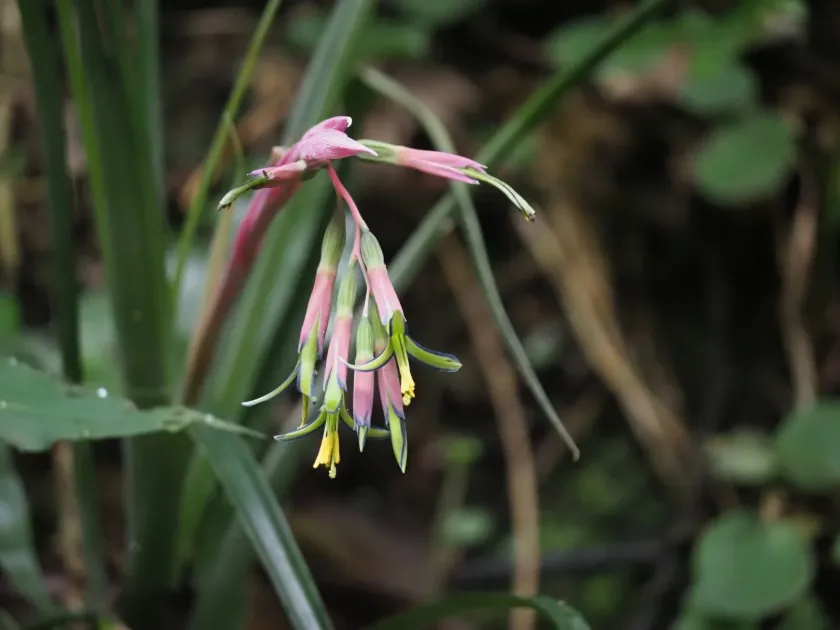
The plant features long, strap-like, leathery leaves arranged in a tight, tubular rosette. The inflorescence is distinctly drooping, displaying pink bracts and green petals with blue margins, which are highly attractive to observers.
For optimal growth, the plant requires bright, indirect light. While it can tolerate lower light levels, sufficient brightness is essential to trigger its unique flowering phase, typically occurring in the cooler months.
The potting medium must be well-draining, similar to substrates used for orchids. Water should be added to the central tank (rosette) of the plant, ensuring that the water quality is soft and free of excessive minerals.
Main diseases and pests
The primary pests affecting Billbergia nutans are mealybugs and scale insects. These pests tend to congregate at the base of the leaves, where they thrive in the humid microclimate provided by the rosette structure.
Spider mites are another common threat, especially in homes with central heating during the winter months. They cause stippling on the leaves, leading to a dull appearance and overall decline in plant vigor if left untreated.
Root rot is the most serious threat caused by improper watering practices. If the soil remains waterlogged for an extended period, the root system will decay, eventually causing the entire plant to collapse from the base.
Fungal infections can occur if there is insufficient air circulation around the foliage. This is often exacerbated by excess moisture remaining on the leaves for too long without adequate drying time.
Effective management includes regular inspection of the leaf axils for signs of infestation. Using neem oil or gentle insecticidal soaps is usually sufficient to handle minor pest outbreaks while maintaining the health of the plant.