
Bifora testiculata
Bifora testiculata (L.) Spreng.
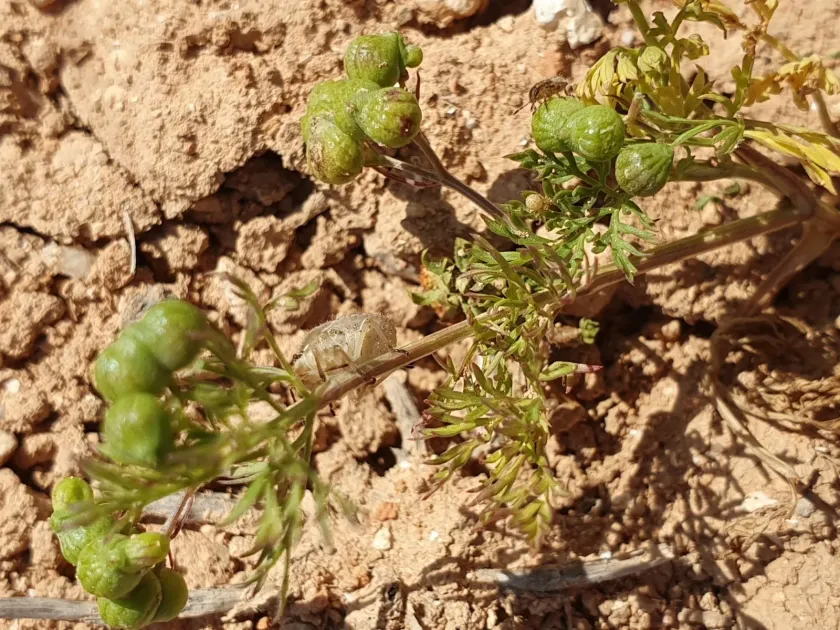
Description
Sowing dates
Bifora testiculata is an annual herbaceous plant that typically germinates during the cooler periods of the year. In regions with Mediterranean climates, autumn sowing is highly recommended, as it allows the plant to establish a robust root system before the onset of summer drought.
For spring sowing, it is essential to prepare the seedbed as early as the soil condition allows. Early planting ensures that the seeds benefit from available soil moisture, which is critical for uniform germination and early establishment in the field.
The sowing depth should be maintained between 1 and 2 centimeters to ensure effective soil contact without hindering the emergence of small seedlings. Shallow sowing is preferred on heavier soils to prevent crusting issues.
Seed density should be carefully controlled to prevent overcrowding, which can reduce air circulation and increase the risk of fungal infections. A well-calculated sowing rate helps in creating a balanced canopy that is more resistant to lodging.
Good soil preparation, including fine-tilth preparation and light rolling after sowing, can significantly increase the germination percentage. This ensures that the seeds have the optimal environment for initial growth.
Growing requirements
As a member of the Apiaceae family, Bifora testiculata thrives in well-drained, fertile soils with a neutral or slightly alkaline pH. It prefers sunny locations and is quite sensitive to soil compaction and waterlogging, which can cause root rot.
Temperature requirements are generally moderate, with the plant performing best in mild spring or autumn conditions. Exposure to extreme heat during the flowering phase can lead to premature senescence and reduced seed development.
Light intensity is a key factor in the production of essential oils. Placing the crop in full sun is necessary for high-quality production, as shade decreases the aromatic profile and overall vigour of the plants.
Regarding fertilization, moderate application of phosphorus and potassium is advised to promote root growth and seed quality. Excessive nitrogen should be avoided as it leads to excessive vegetative growth at the expense of reproductive output.
Environmental adaptability is a key trait of this species, but it remains dependent on consistent moisture levels during the active growth phase. Drip irrigation is an efficient method to supply water without wetting the foliage excessively.
Yield
Yield potential of Bifora testiculata is primarily defined by the number of fertile umbels per plant and the quality of the harvested seeds. Consistent agronomic management can stabilize production levels across multiple growing seasons.
One of the main challenges for producers is the non-uniform maturation of seeds within the umbels. Implementing precise monitoring allows farmers to harvest at the moment of peak seed maturity to maximize yields.
Yield can be negatively impacted by adverse weather conditions during the pollination period, such as strong winds or high humidity. Providing adequate crop protection and utilizing windbreaks can mitigate these risks effectively.
Advanced harvesting techniques, including the use of desiccants, are often employed in large-scale production to synchronize seed ripening. This allows for a single, efficient machine harvest rather than multiple manual passes.
Post-harvest processing is critical, as improper drying or storage can significantly reduce the final marketable yield. Proper airflow and controlled temperature conditions are mandatory to maintain seed integrity.
Main diseases and pests
Fungal pathogens such as powdery mildew and various leaf spot diseases are the primary threats to the crop. These diseases thrive in humid, stagnant air, making proper spacing and weed management essential control measures.
Insect pests, particularly aphids, can cause significant damage by feeding on the sap of young plants and potentially transmitting viruses. Early detection and the use of integrated pest management are recommended to keep populations below economic injury levels.
Weeds are a major competitor for resources during the early stages of growth. Because the plant is relatively small in stature, early-season mechanical or chemical weeding is necessary to prevent the crop from being choked out.
Effective crop rotation is the best preventive strategy against soil-borne pathogens. Avoiding the planting of Apiaceae crops on the same site for at least three consecutive years helps in breaking the life cycle of specialized pests.
Environmental stress, such as sudden drought followed by heavy rain, can also cause damage like stem splitting or seed shattering. Careful monitoring and responsive irrigation management remain the best defense.
Harvesting
Harvesting is typically carried out when the majority of seeds have turned a dull brown color and the plant begins to lose its green vitality. Immediate harvesting is vital, as the seeds are prone to shattering and falling to the ground when fully ripe.
The preferred time for harvest is early morning or late evening when the humidity is slightly higher. This helps in reducing the mechanical loss caused by shattering during the cutting and transport phases.
Once harvested, the plant material must be dried promptly in a shaded, well-ventilated area. This prevents the heating of the seed mass, which could lead to the deterioration of essential oils and potential fungal growth.
Cleaning involves removing debris, stems, and immature seeds using standardized seed cleaning machinery. This step is essential to ensure that the final product meets commercial quality standards and storage longevity.
Finally, the clean, dry seeds should be stored in breathable containers in a cool, dry warehouse. Proper storage practices ensure that the crop maintains its quality and viability for future use or market distribution.